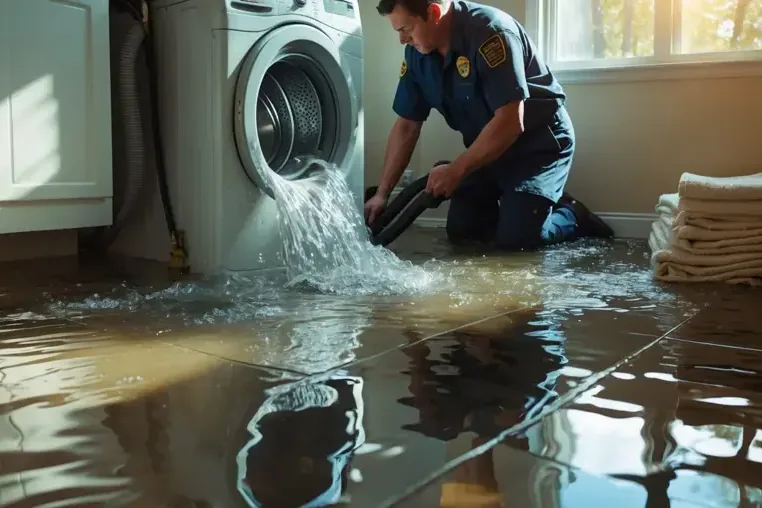
A hidden leak does its damage quietly, behind a wall or under a cabinet. In Dunedin, the EyeOnWater app gives water customers real time use data and leak alerts, which can turn a quiet leak into a visible one.
Key takeaways
- The City of Dunedin runs its own water system, and the EyeOnWater app gives customers real time use data and leak alerts.
- Use that keeps showing when nothing is running points to a leak somewhere in the house.
- Shutting off the main water supply stops the water while the source is traced.
- Slow leaks soak drywall, cabinet bases and flooring long before a puddle appears.
- A plumber fixes the pipe, and a drying team removes the moisture the leak left behind.
What the EyeOnWater app watches for
The City of Dunedin runs its own water system. Drinking water comes from the Floridan aquifer through wells located throughout the city, and it is treated and chlorinated at the city's Reverse Osmosis Water Treatment Plant.
The EyeOnWater app gives water customers real time use data and leak alerts. It shows how much water a household uses and when, which makes a constant leak easier to spot than a monthly bill does.
A household that checks the app learns its normal pattern: low use overnight and spikes at showers and laundry. A leak breaks that pattern by never letting use fall to zero.
The app also helps after repairs. Once the leak is fixed, the use should fall back to normal, and the app confirms it.
Reading a constant use alert
An alert says that water is moving through the meter when it should not be. It does not say where the water is going, so the next steps are about narrowing it down.
Quick checks
- Make sure no one is using water, then look at the app again.
- Check every toilet for a running tank or a flapper that does not seal.
- Look under sinks and behind the washer and dishwasher for wet spots.
- Look at the water heater and at the ceiling below any upstairs bathroom.
Shut off and trace
If the use keeps showing, shut off the main water supply and watch the app. If the use stops, the leak is on the house side of the shutoff.
A plumber can trace the source from there, and the shutoff keeps the water from doing more damage in the meantime.
Write down what the app showed and when the alert came. A plumber and the drying team both work faster with that record.
Where hidden leaks usually start
Most hidden leaks start at a connection that no one looks at. A supply hose, a fill valve or a fitting can drip for weeks, and appliance and supply hose leaks are a common reason a bill or an alert changes.
Pipes inside walls and ceilings are different. When one of them fails, it becomes burst pipe water damage, and the water can fill a cavity quickly.
Appliance leaks are slow by nature. A hose seam weeps, the water runs behind the machine and the floor underneath soaks for a long time before anyone notices.
Fixtures upstairs add a second risk, because water that leaks under a tub or a toilet can come through the ceiling below.
- Toilet fill valves and flappers.
- Washing machine hoses and dishwasher supply connections.
- Ice maker supply tubes behind the refrigerator.
- Water heater fittings and relief valves.
- Supply pipes inside walls and ceilings.
Signs the leak has already reached the structure
Dunedin has hot, humid summers and mild winters, so damp materials stay damp. Mold can start within 24 to 48 hours once something is wet.
Some signs show up only in the corners of a room. Check behind furniture, under cabinets and in closets that share a wall with a bathroom or the kitchen.
- Baseboards that swell or pull away from the wall.
- Paint that bubbles or drywall that feels soft.
- Cabinet bases that feel spongy or smell musty.
- Flooring that cups, buckles or opens at the seams.
- A damp odor in a room with no visible water.
What cleanup and drying involve
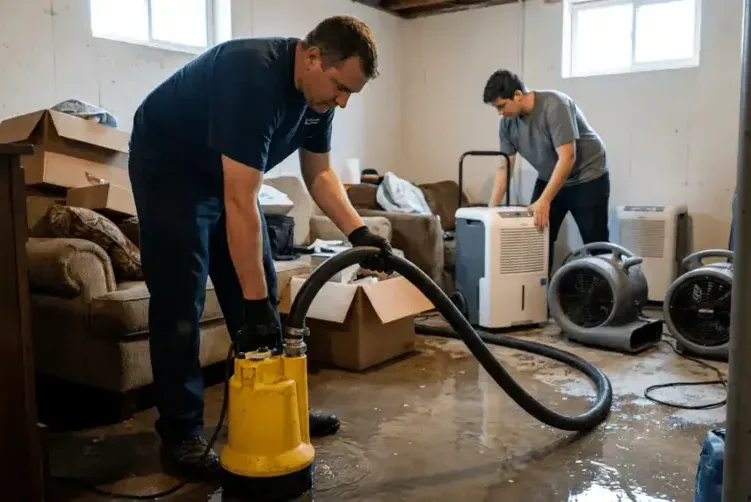
The drying team finds the wet area with a moisture meter and a thermal camera, then opens only what has to be opened.
Wet cabinet toe kicks and baseboards come off, a small section of drywall may be cut out, and air movers and a dehumidifier start drying the cavity.
A plumber repairs the pipe or the appliance connection first, so the drying does not start over. Wider appliance and supply hose leak cleanup work follows the same order.
Drying times vary with the size of the wet area and the materials involved. Cabinet bases and subfloors take longer than painted drywall, and local water damage restoration teams adjust the equipment as the readings change.
- Wet insulation and soft drywall come out.
- Cabinet toe kicks come off so the cavity can breathe.
- Flooring is lifted where water has run under it.
- Readings are repeated until each area is dry.
A simple routine that catches leaks early
A few habits turn the app into a real early warning.
- Open the app now and then, and again after coming home from a trip.
- Look at the app when the house is quiet and nothing should be running.
- Replace rubber washing machine hoses with braided ones before they fail.
- Know where the main shutoff is and make sure it turns.
- Keep a flashlight and towels near the water heater.
When the alert is not a leak
Not every alert means damage. Knowing the usual causes saves an unneeded plumber visit and keeps attention on real leaks.
- A toilet that refills slowly after each flush.
- An irrigation cycle running on a timer.
- A pool or water feature filling.
- A houseful of guests with heavy use.
Questions
Does an EyeOnWater alert always mean a pipe is leaking?
Not always. A running toilet, an irrigation cycle or an appliance that is filling can look like a leak. Checking each fixture and shutting off the main shows whether the use is real.
How can a homeowner find the main shutoff?
It is usually near the water meter or where the supply pipe enters the house. Turn it fully each way once so it is known to work before an emergency.
Can a slow leak damage a house without a puddle?
Yes. Water can soak a wall cavity or the base of a cabinet for weeks with nothing visible on the floor. Damp odor, swollen trim and soft drywall are the usual clues.
Who fixes the pipe, and who dries the house?
A plumber repairs the pipe or the connection. The restoration team removes wet materials and dries the structure, and the two jobs are done in that order.
Is the app a substitute for checking the house?
No. It shows use, not location. Checks under sinks, around appliances and near the water heater are still needed to find the source.
What should be photographed after a leak is found?
The wet area, the source if it is visible, any stains or swelling and the app screen showing the alert. Wide shots and close shots help the drying team plan the work.