Water Extraction and Removal in Pinellas Park, FL
Standing water soaks deeper into pad, baseboards and drywall every hour it sits. The extraction crew pulls it out with truck-mounted and portable units, then sets the drying equipment on the same visit.
☎ (888) 621-2041Water on the floor? Get it pulled up now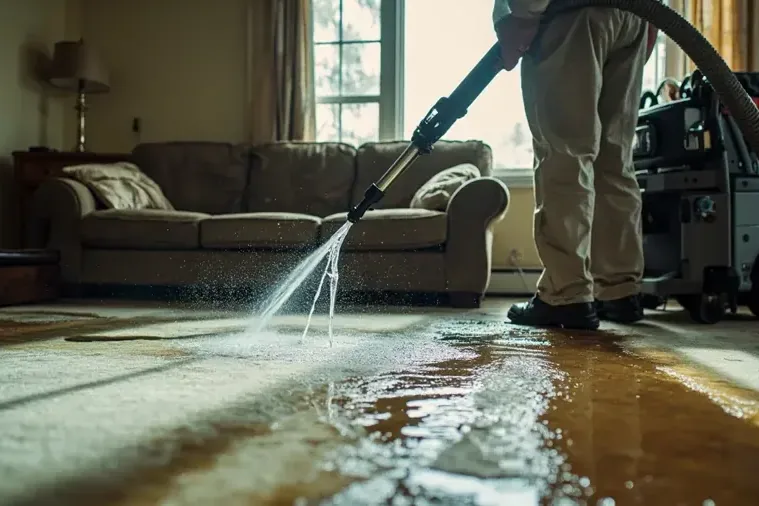
First steps for water extraction and removal
- Stop the water. Close the main valve or the fixture valve, or switch the AC off if the air handler is the source.
- Cut power to wet rooms. Turn off breakers for rooms with water near outlets, if the panel is dry and safe to reach.
- Lift and move. Move rugs, electronics, papers and small furniture out of the water, and set foil or blocks under furniture legs.
- Photograph everything. Take photos and video of the water and the damage before cleanup starts, for the claim file.
Extraction is the first job on almost every water loss, and it does the most good per hour. A soaked carpet and pad hold a surprising amount of water, and every gallon the extraction crew pulls out with a wand is a gallon the dehumidifiers never have to evaporate. In block homes on slabs, water also slips under baseboards and tack strip, so the crew starts at the edges and works toward the middle of the room.
What does water extraction and removal cost in Pinellas Park, FL?
In Pinellas Park, water extraction with the first round of drying typically runs $700 to $3,500 for one to three rooms of clean water, and more when the water is contaminated or reached most of the home.
One room, clean water
$700 to $1,800- Extraction of carpet or tile
- Moisture readings
- Air movers set
Several rooms
$1,800 to $3,500- Truck-mounted extraction
- Pad removed where needed
- LGR dehumidifiers
Most of the home or Category 3
$3,500 to $9,000+- Contaminated water
- Carpet and pad out
- Antimicrobial treatment
Ranges are typical, not a quote: the category of water, square footage, material class and how fast drying started move the number most. Run the water damage cost calculator for a closer range.
How water extraction and removal is handled, step by step
Find the edges
The tech maps where the water reached with meters and thermal imaging, including under baseboards and cabinets.
Pull the water
The extraction crew runs truck-mounted and portable units room by room, edges first, then the open floor.
Decide what stays
The crew removes soaked pad, drywall with wet insulation and anything contaminated water touched; the rest dries in place.
Set the drying
The drying team places air movers and LGR dehumidifiers and takes the first readings for the drying log.
What extraction removes
The tech who does the walkthrough maps the wet area first, so the crew knows where the water went and not just where it shows.
- Standing water on tile, wood-look vinyl and bare concrete
- Water held in carpet and pad, pulled with weighted or stand-on extraction tools
- Water trapped under toe kicks, door thresholds and tack strip
- Water in manufactured home floors, where the crew works from inside and from underneath
Truck-mounted or portable
A truck-mounted unit sits outside and runs long hoses into the home, so it pulls a lot of water with strong suction and keeps the noise and exhaust outdoors. Portable extractors and submersible pumps reach condos, second floors and spots a hose cannot get to. Most jobs here use both: the truck for the main rooms and portables for closets, baths and tight corners.
Why speed matters in humid air
Water left on a floor wicks up drywall and into cabinet bases, and warm, humid air keeps it from drying out on its own. The EPA guide to moisture and your home advises drying wet materials within 24 to 48 hours. Flood water from outside is a different job: OSHA notes that floodwater can carry sewage and chemicals, so the crew handles it as Category 3 under the flood water cleanup steps.
What stays and what goes
After extraction, the restoration team decides what dries in place and what comes out, then sets air movers and LGR dehumidifiers for structural drying.
- Clean water on carpet: the carpet often stays, the pad is often replaced
- Gray or black water: carpet and pad come out
- Drywall with wet insulation behind it: cut a few inches above the wet mark
- Tile and concrete: usually dried in place
Water extraction and removal across Pinellas Park and nearby
Coverage takes in ZIP 33780, 33781 and 33782: Downtown and Park Boulevard, The Mainlands, Bonnie Bay, Autumn Run, Park Place, the US 19 and 49th Street corridors and the homes around Freedom Lake Park.
Nearby coverage reaches Seminole, Largo, Kenneth City, Lealman, St. Petersburg, Clearwater, Feather Sound.
Related water damage services
Water Extraction and Removal questions
How fast should standing water be extracted?
As soon as possible. Water keeps wicking into drywall, cabinets and baseboards while it sits, and the EPA advises drying wet materials within 24 to 48 hours. Extraction removes the most water in the least time.
Can I use a shop vacuum instead?
A shop vacuum helps with a small spill on tile. It cannot pull water out of carpet pad or from under baseboards, and it is slow on more than a few gallons. For a whole room, truck-mounted or commercial portable extraction does far more.
Will my carpet be saved after extraction?
Often, when the water was clean and extraction started early. The pad underneath soaks up the most and costs little to replace, so it often comes out. Carpet touched by sewage or flood water from outside gets removed.
Does extraction dry the floor completely?
No. Extraction removes the liquid water. The moisture left in pad, subfloor, slab and wall bottoms dries with air movers and dehumidifiers over the next few days, checked with daily readings.
Is water extraction covered by insurance?
When the water came from a sudden and accidental event like a burst pipe, extraction is usually part of the mitigation a policy pays for. Flood water from outside falls under flood coverage. Coverage depends on your policy, so check with your own insurer.
What does water extraction cost?
Most one to three room clean-water jobs run $700 to $3,500 with the first round of drying. The water damage cost calculator gives a typical range for the whole job.
Standing water in the house? Get it out now.
Every hour the water sits, it soaks deeper into pad, baseboards and drywall. The extraction crew starts at the edges and works in.
☎ (888) 621-2041Start the extraction, 24/7