Water Damage Restoration Clearwater, FL
Surge from the Gulf, a backed-up drain or a failed water heater can soak a Clearwater home quickly. The restoration team extracts the water, dries to the IICRC S500 standard and records each reading.
☎ (888) 621-2041Call the drying team about your water loss
Three moves that limit the damage
- Close the valve. Turn off the fixture valve or the home's main shutoff so the source stops adding water.
- Cut power to wet rooms. Switch off the breakers serving soaked areas, and stay out of standing water if an outlet or cord sits in it.
- Photograph everything. Take wide and close shots of the water, the damaged items and the source before anything gets moved.
Water damage services for homes and businesses here
Each service below fits a different kind of loss, from surge water near the beach to a leaking water heater in a garage closet.
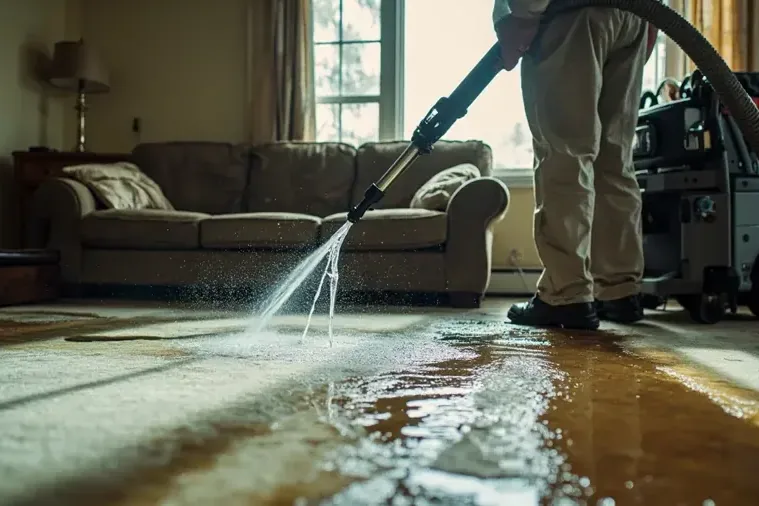
Water Extraction and Removal
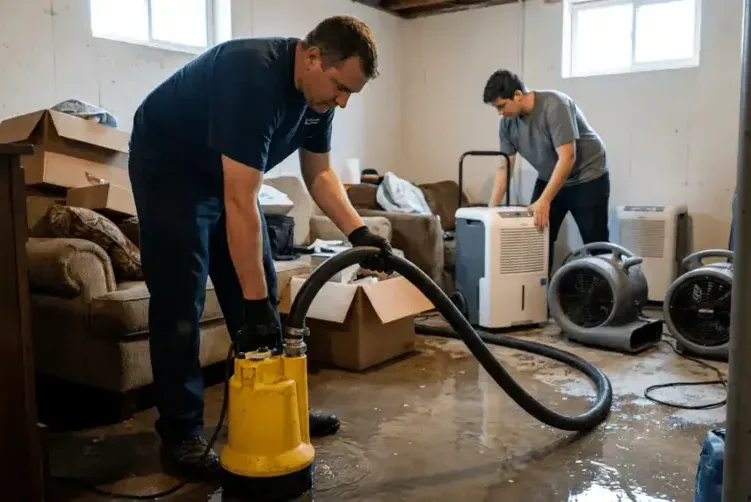
Standing water from a storm, a failed hose or a flooded garage is pulled out first with truck-mounted and portable extractors, before drying equipment goes in.
See the service ›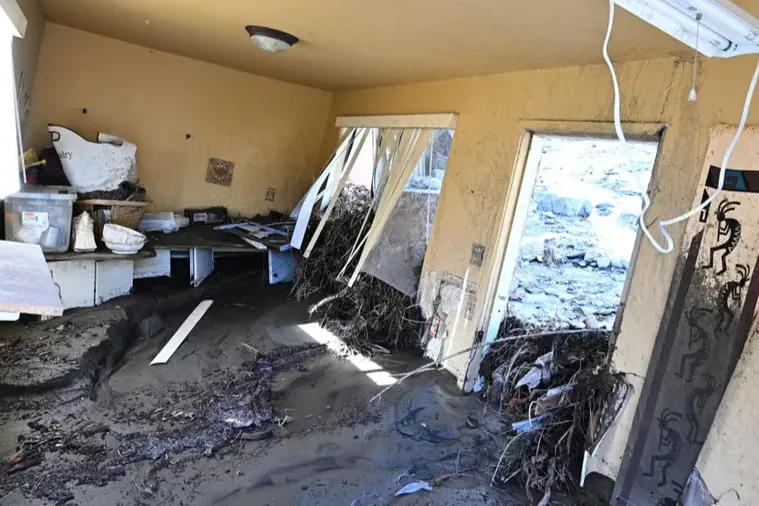
Flood Water Cleanup
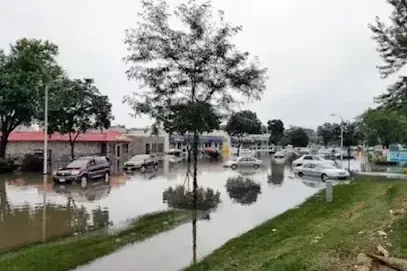
Surge and heavy rain push mud and contaminated water into ground floors. Wet flooring and low drywall come out, then the framing is cleaned and dried.
See the service ›How a dry-out runs
- Water pulled out first
- Moisture mapped room by room
- Readings logged daily
- Targets set to S500
- Photos before demolition
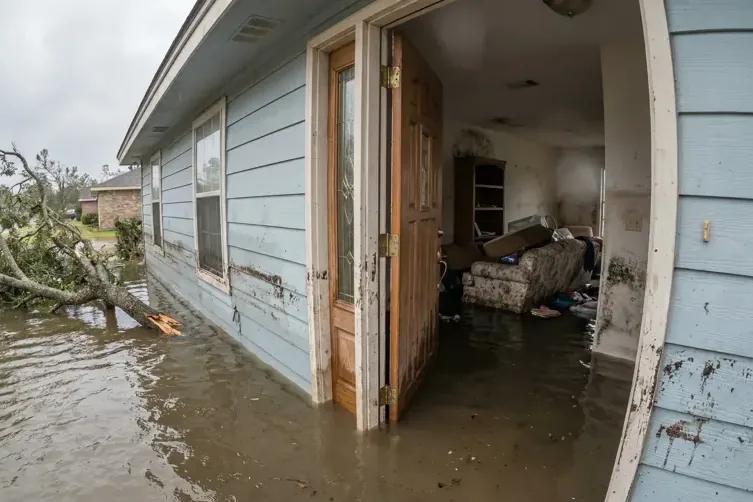
Hurricane and Storm Water Damage
Wind-driven rain finds its way past roofs, soffits and window frames. Wet ceilings and insulation are opened and the rooms below dried.
See the service ›
Sewage Backup Cleanup
Backed-up toilets, tubs and floor drains release contaminated water. The area is contained, porous materials are bagged out, and every surface is cleaned and treated.
See the service ›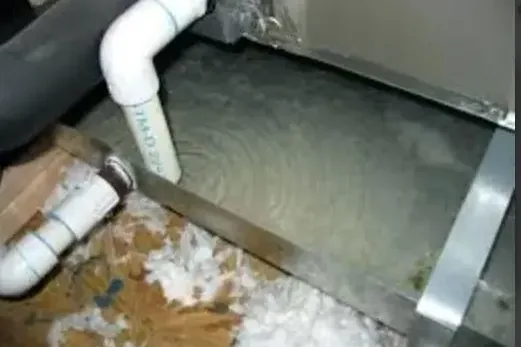
AC Leak Water Damage
A clogged condensate drain drips into a closet or hallway ceiling. Wet drywall and insulation are cut out and the framing is dried.
See the service ›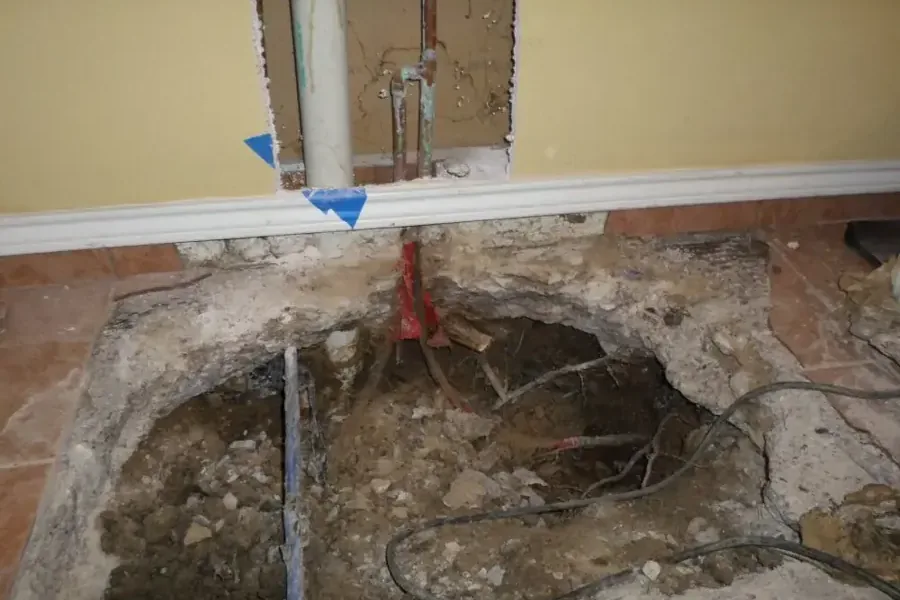
Slab Leak Water Damage
A supply pipe leaking beneath a concrete floor lifts flooring and soaks the slab. Wet finishes come up and the concrete is dried with desiccant equipment.
See the service ›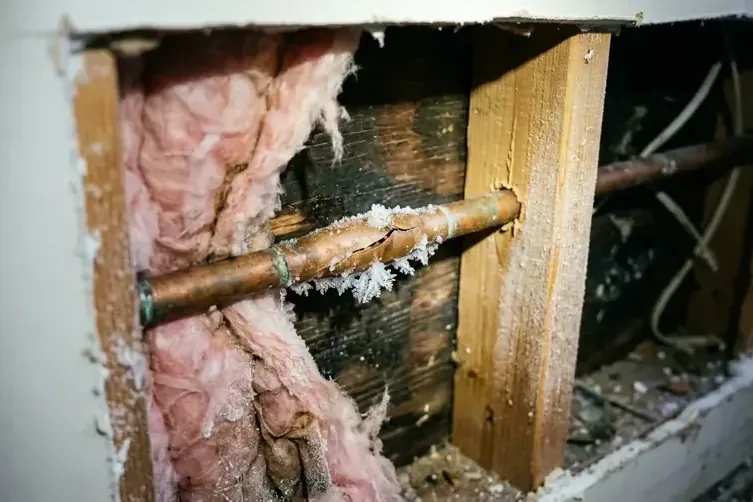
Burst Pipe Water Damage
When a pipe splits, water runs behind walls and under cabinets. The crew extracts the pooled water, opens the cavity and dries framing and insulation.
See the service ›Equipment on the job
- Truck-mounted extractors
- LGR dehumidifiers
- Desiccant units
- Thermal cameras
- HEPA air scrubbers
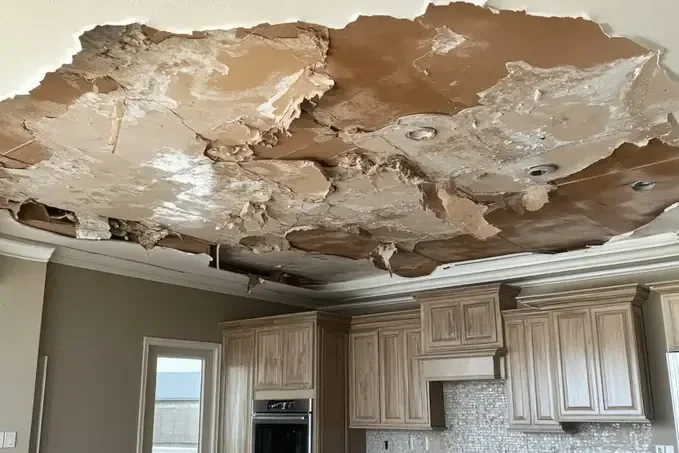
Roof Leak Water Damage
A damaged shingle or flashing lets rain soak the attic and ceiling below. Wet insulation and sagging drywall are removed, and the joists are dried out.
See the service ›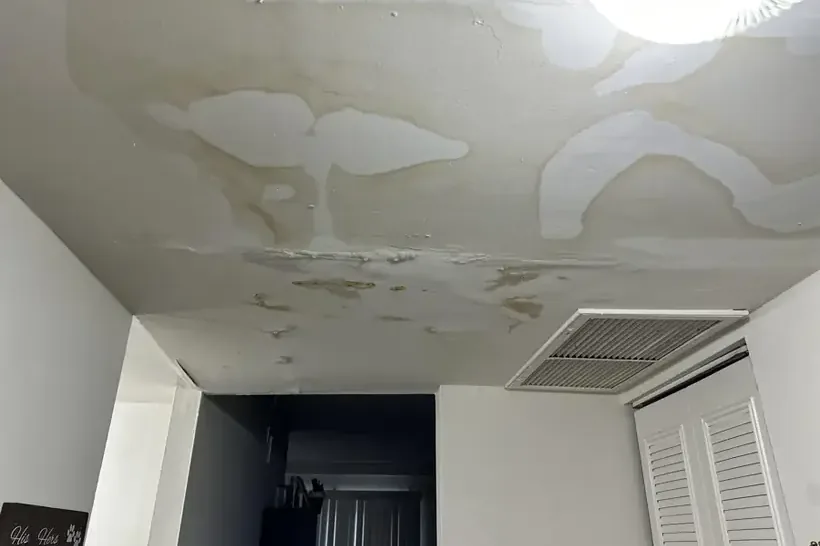
Ceiling Leak Water Damage
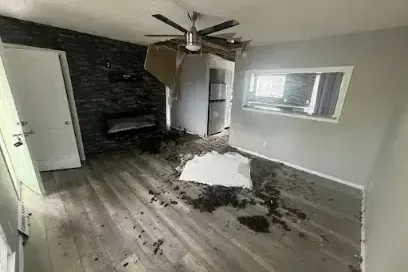
Brown stains and a sagging ceiling point to water above, from a roof, a bathroom or the apartment upstairs. The wet section is opened and dried.
See the service ›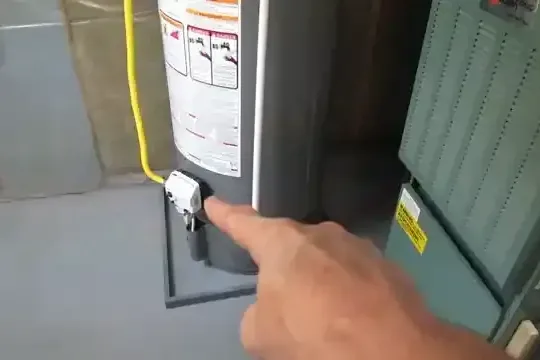
Water Heater Leak Cleanup
A leaking or failed tank can empty dozens of gallons into a garage or closet. The water is extracted, nearby walls are checked, and the floor is dried.
See the service ›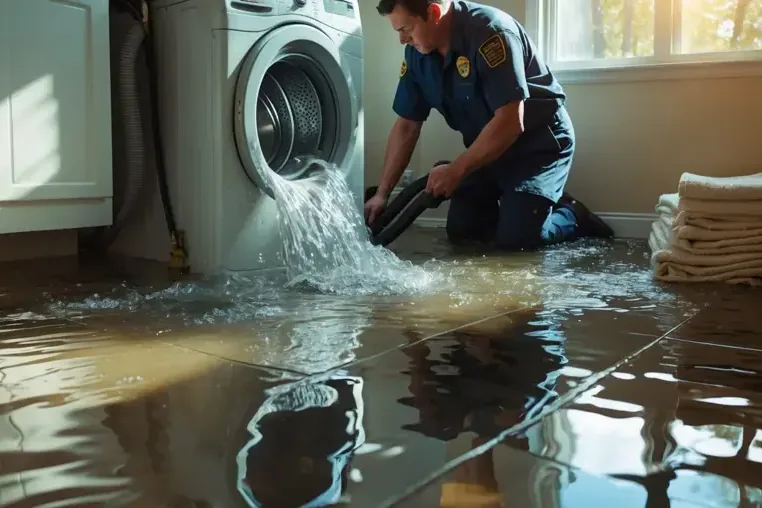
Appliance and Supply Hose Leaks
Washing machines, dishwashers, ice makers and supply hoses leak slowly or fail all at once. Cabinet bases, flooring and wall bottoms are checked and dried.
See the service ›Neighborhoods in town
- Island Estates
- Sand Key
- Harbor Oaks
- Countryside
- North Greenwood
- Del Oro Groves
- Greenbriar
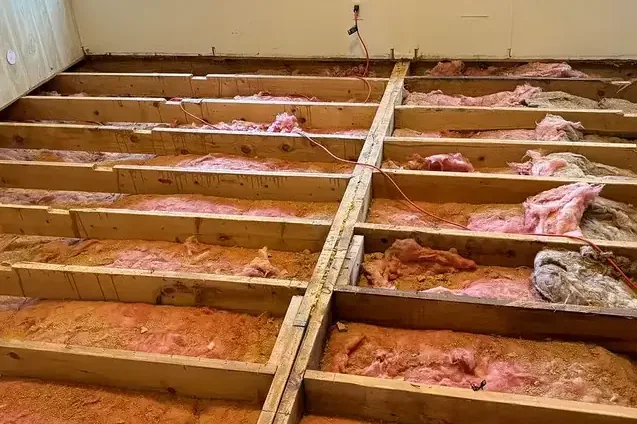
Mobile Home Water Damage
Manufactured homes have thin floors and wet insulation underneath. Soaked particleboard is cut out and the belly checked before the framing is dried.
See the service ›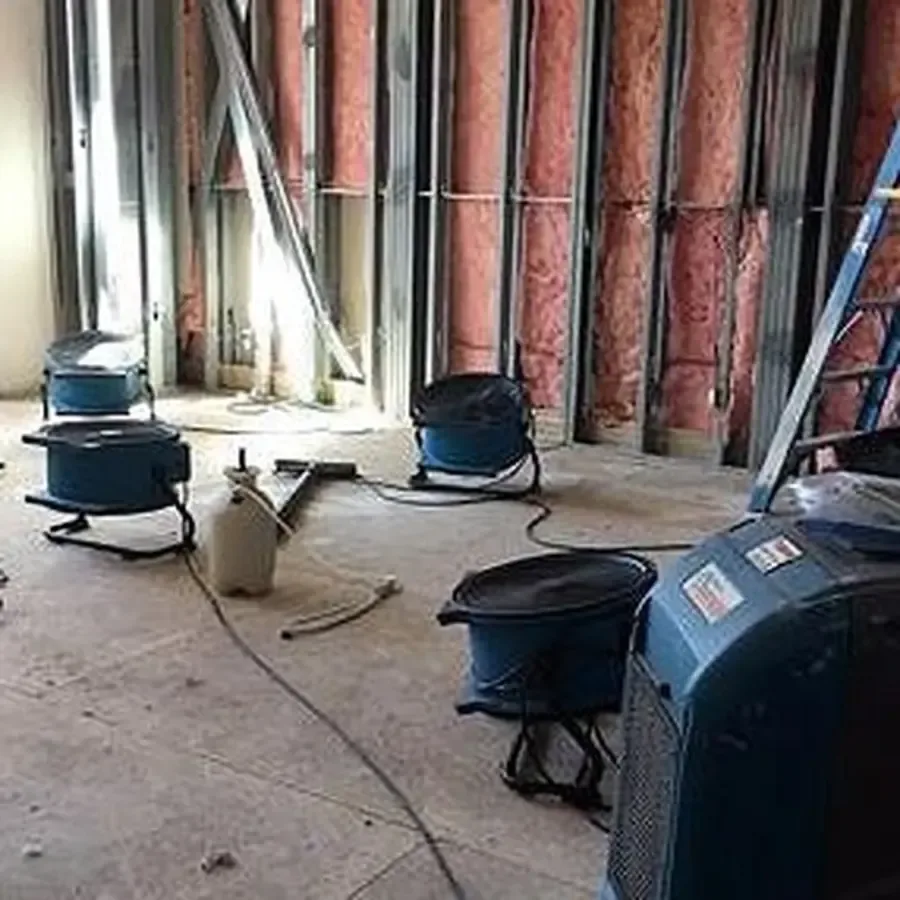
Structural Drying and Dehumidification
Once the standing water is gone, dehumidifiers and air movers pull moisture out of framing, subfloor and concrete until readings match dry reference points.
See the service ›
Commercial Water Damage
Shops, offices and multi-unit buildings need drying that keeps businesses open. Work is phased by suite, with containment and after-hours scheduling when it helps.
See the service ›Built for the water this coast sees
Surge, tropical downpours and dense apartment buildings give local water losses many forms, so the response starts with water extraction and covers every water category.
Night and weekend dispatch
Water loss ignores office hours, so overnight, weekend and holiday calls are treated as urgent from the start.
Standards-based drying
Targets follow the IICRC S500 standard, with moisture readings repeated at set points until framing and flooring reach dry values.
Claim-ready records
Photos, moisture logs and equipment notes are kept on every job so an adjuster can follow what was removed, dried and why.
Equipment for every case
Truck-mounted extractors, LGR and desiccant dehumidifiers and air movers cover a wet bathroom floor as well as a flooded ground floor.
Measured drying from the first reading to the last
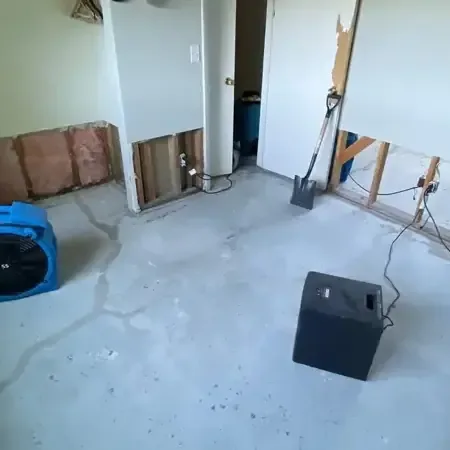
Wet materials hold water long after the puddles are gone. The drying team removes standing water, opens wet cavities where readings call for it, and keeps equipment running in every room until the numbers match dry reference points.
- Thermal camera scans
- Readings logged per room
- Dry standards documented
Find the wet areas
Moisture meters and a thermal camera show where water traveled, including behind baseboards and under flooring that looks fine.
Extract the water
Truck-mounted and portable extractors pull standing water and soaked carpet or tile surfaces before any air movement begins.
Set the drying system
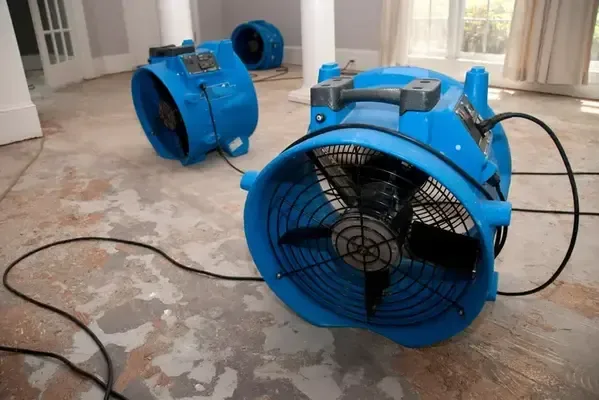
Air movers, LGR dehumidifiers and open cavities are placed from the readings, then adjusted as structural drying progresses.
Verify and release
Equipment stays until each material reaches its dry goal, and the final readings go into the job record.
The water category decides the cleanup plan
Serving Clearwater from Island Estates to Countryside
Neighborhoods and roads
- Island Estates
- Sand Key
- Harbor Oaks
- Countryside
- North Greenwood
- Del Oro Groves
- Greenbriar
- Cleveland Street
- Coachman Park
- State Road 60
- McMullen Booth Road
- Keene Road
- Holt Avenue
- Pier 60
Water damage in an area not listed?
The list above names the main neighborhoods and roads, but the crew works anywhere in the city where a home or business has water that should not be there, as the wider service area shows.
Give the street area and the type of loss when calling, and the team plans the equipment before heading out.
Clearwater, FL · [email protected]
What water damage restoration typically costs here
Most local jobs fall between $1,200 and $30,000 or more, depending on size. The biggest drivers are the water category, the square footage touched and how long the water sat before extraction began.
One room, clean water
$1,200 to $6,000- Extraction and drying
- One or two rooms
- Little tear-out
Several rooms or gray water
$6,000 to $15,000- Flooring and pad lifted
- Wet drywall cut
- Containment where needed
Whole floor or black water
$7,000 to $30,000+- Category 3 water
- Porous materials bagged
- Extended dry-out
Exact pricing follows the moisture readings, which show what can be saved. Photos and logs from the job also support the insurance claim.
Records an adjuster looks for
Adjusters follow the paper trail, so each step of the dry-out is written down as it happens, from the first photos to the last moisture reading.
- Dated photos taken before any removal
- Source of the water and when it was first found
- Moisture readings for every affected room and material
- Itemized list of every material removed
- Equipment placement and daily run logs
What homeowners can do themselves
Photograph each room, move small valuables to a dry spot and keep damaged items that cannot be dried until the adjuster has seen them.
Sudden leaks, storm water and slow seepage are treated differently by carriers, so read the coverage language and ask questions before signing any scope of work.
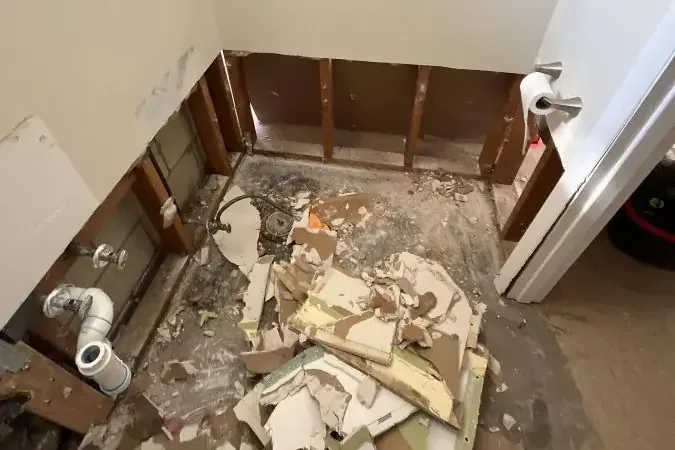
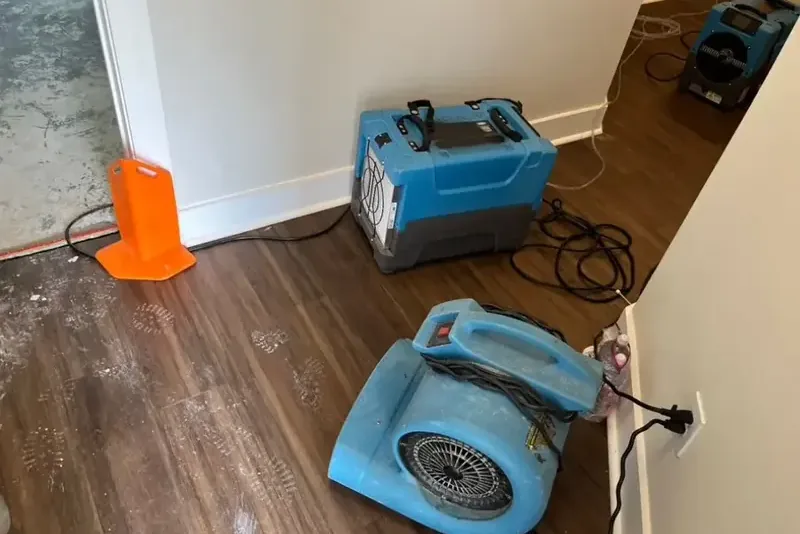
Water extraction and drying in progress

What puts local homes at risk
The city sits between the Gulf of Mexico and Tampa Bay, and Clearwater Harbor, Stevenson Creek, Alligator Creek and Allen's Creek all appear in its flood and drainage planning. Add a wet season from June through September and a median home built in 1977, and local water losses come from many directions.
- Surge and tide water. Idalia brought a 4.8 foot surge to Clearwater Beach in 2023, and Tampa Bay Times coverage put Helene's near 6 feet in 2024.
- Heavy summer rain. The wet season runs June through September with daily thunderstorms, so roof leaks and overloaded drains turn up here every year.
- Sewage overflows. Named spills include about 500,000 gallons from the Marshall Street plant on May 9, 2023, and 44,881 gallons near Holt Avenue and Russell Street on September 19, 2026.
- Dense apartment living. Buildings with 50 or more units hold 11,854 housing units, so a leak in one unit often reaches the ones below and beside it.
- Manufactured homes. The city has 3,922 mobile homes, where a wet floor can hide damage in the subfloor and the insulation underneath.
October 2024: Hurricane Milton brought 10 to 14 inches of rain to the Tampa Bay region, and the Florida Climate Center puts the highest totals near 20 inches around Clearwater Beach and St. Petersburg. High-water vehicles pulled 565 people from a flooded apartment complex.
Common questions from homeowners here
How soon should drying start after water enters a home?
As soon as the source is stopped. Wet drywall, carpet pad and framing can start growing mold in 24 to 48 hours in warm, humid weather, and early extraction makes every later step faster.
Is storm surge water considered contaminated?
Yes. Surge and flood water carry sewage, soil and debris, so they are treated as Category 3. Carpet, pad and wet drywall are removed instead of dried in place, and surfaces get an antimicrobial treatment.
Can a homeowner clean up a sewage backup alone?
That is not recommended. Raw sewage carries bacteria and viruses, so sewage backup cleanup seals the area off, bags porous materials and puts workers in protective gear. Family members and pets should stay out until the cleanup is finished.
How long does a typical dry-out last?
Most structures reach their drying goals in three to five days, though heavy materials and soaked flooring can run longer. Daily readings decide when equipment comes out, not the calendar.
Who handles the water pipe from the street to the house?
The city says it covers the water service pipe from the main to the property boundary or meter, and the owner is responsible from the meter to the home. A leak past the meter is the owner's repair.
Does a flood map matter after water damage?
The city's interactive flood map shows base flood elevation and damage history for individual properties, and the city has adopted elevation standards above the federal minimum. That can matter when repairs grow large. Flood zones and evacuation zones are different.
What happens when the leak starts in the unit above?
Water often travels through ceilings, walls and shared floors to the units below and beside. The team traces the path, documents each affected unit and dries every wet assembly behind a ceiling leak, not just the visible stain.
Does replacing a water heater after a leak need a permit?
The city's permit page says plumbing work regulated by the Florida Building Code needs a permit, and contractors file water heater permits online. The plumber normally handles that, while the drying team handles the wet floor and walls after a water heater leak.
Can wet carpet be saved after a roof leak?
Often yes, when the water is clean and drying begins promptly, as with a typical roof leak. Carpet that soaked up storm water or stayed wet for days usually goes out, because the pad underneath rarely dries well.
What should be photographed before anything is removed?
Wide shots of each room, close shots of the wet materials and the water source, plus any damaged belongings. Adjusters rely on that evidence before demolition begins.
Water still spreading? Talk to the response team now
The longer water sits, the more drywall, flooring and framing absorb it, so an early call limits both the damage and the final bill.
☎ (888) 621-2041Call the restoration team