Structural Drying and Dehumidification in Pinellas Park, FL
Carpet can feel dry while the framing, the slab and the block walls still hold water. The drying team sets air movers and dehumidifiers to the room's load and keeps them running until the readings say dry.
☎ (888) 621-2041Need the house dried right? Call now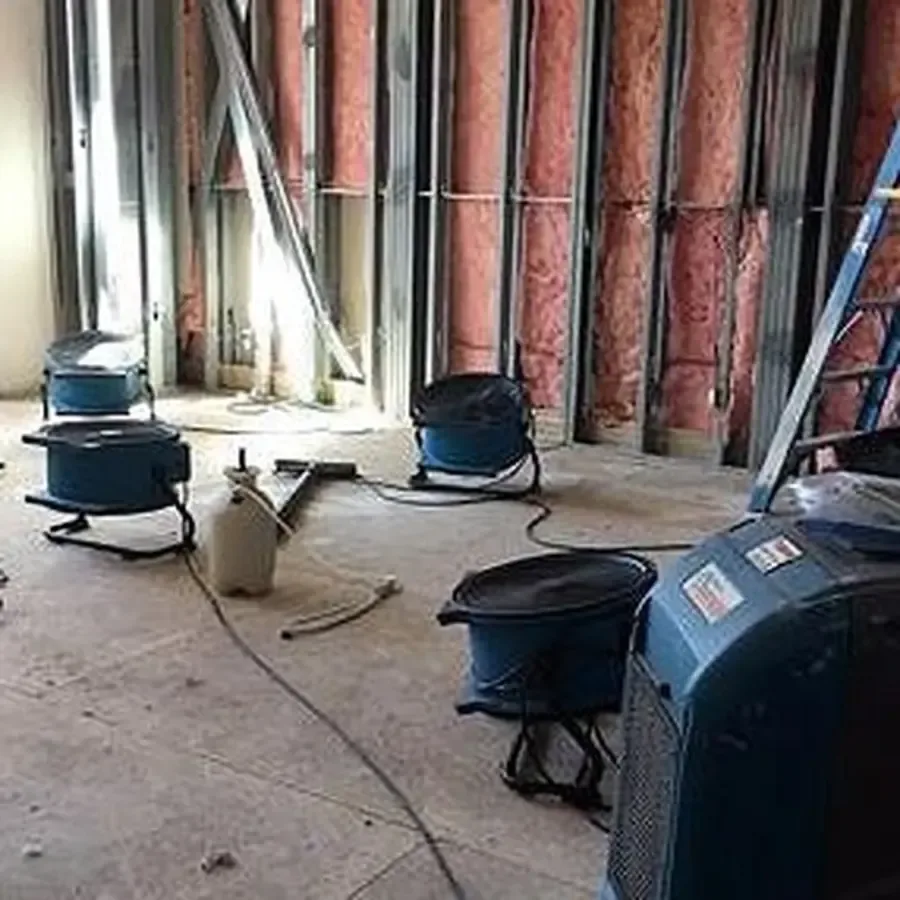
First steps for structural drying and dehumidification
- Keep the AC on. Run the air conditioning if it is safe and working; it helps pull humidity down.
- Close windows. Keep humid outdoor air out of the wet rooms.
- Leave equipment running. Once drying starts, do not turn off air movers or dehumidifiers between readings.
- Keep paths clear. Leave room around equipment and do not cover vents or hoses.
Structural drying is the part of water damage restoration that takes the longest and gets skipped most often. After extraction, water is still inside the drywall, the framing, the subfloor, the concrete slab and the concrete block walls most homes here are built from. IICRC S500 is the industry drying standard, and it sets the goal: every wet material dried to within 2 to 4 points of a dry reference material of the same kind in the same home.
What does structural drying and dehumidification cost in Pinellas Park, FL?
In Pinellas Park, structural drying typically runs $1,000 to $8,000 on its own, depending on the class of loss, how many rooms need equipment and how many days the readings take to reach the dry reference.
Class 1 or 2, one area
$1,000 to $2,500- Air movers
- One dehumidifier
- Three to five days
Class 3, several rooms
$2,500 to $5,000- Several dehumidifiers
- Containment
- Daily logs
Class 4, slab or block
$5,000 to $8,000+- Desiccant drying
- Tenting
- Long monitoring
Ranges are typical, not a quote: the category of water, square footage, material class and how fast drying started move the number most. Run the water damage cost calculator for a closer range.
How structural drying and dehumidification is handled, step by step
Map and set the reference
The tech maps wet materials and picks a dry reference of each material in the home.
Size the equipment
The drying team sets air movers and dehumidifiers to each room's class and load.
Log daily
The crew records readings, temperature and humidity every day and moves equipment as areas dry.
Confirm and close
Equipment comes out when every material reads within 2 to 4 points of the dry reference.
The equipment and why it is sized
- Air movers push dry air across wet surfaces to speed evaporation, set by the room's evaporation load
- LGR dehumidifiers pull that moisture out of the air, even in humid summer weather
- Desiccant dehumidifiers dry dense Class 4 materials like slabs, block and hardwood
- Containment with plastic sheeting focuses the dry air where it is needed
The class of loss, from Class 1 to Class 4, sets how much equipment a room needs. Too little equipment drags drying out; too much wastes power without drying faster.
Why humidity matters so much here
Summer air here is warm and heavy with moisture. An air mover alone just moves that wet air around. The drying team closes the room, runs dehumidifiers and tracks temperature and humidity in a psychrometric log, so the air stays dry enough to keep pulling water out of the materials. The EPA indoor air quality pages cover indoor humidity, and the EPA moisture guide explains why wet materials should dry within 24 to 48 hours.
Readings decide, not the calendar
The local restoration pros take readings every day on the same spots and compare them to the dry reference. Equipment comes out when the numbers match, which can be three days for a small clean-water loss or ten or more for a soaked slab. The drying time estimator gives a typical window, and those daily logs become part of the insurance claim file.
Structural drying and dehumidification across Pinellas Park and nearby
Coverage takes in ZIP 33780, 33781 and 33782: Downtown and Park Boulevard, The Mainlands, Bonnie Bay, Autumn Run, Park Place, the US 19 and 49th Street corridors and the homes around Freedom Lake Park.
Nearby coverage reaches Seminole, Largo, Kenneth City, Lealman, St. Petersburg, Clearwater, Feather Sound.
Related water damage services
Structural Drying and Dehumidification questions
What does dry to a dry reference mean?
The crew measures a material in the home that never got wet, like an untouched wall, and dries the wet material until it reads within 2 to 4 points of that number.
Why are there so many fans and dehumidifiers?
The equipment is sized to the class of loss and the evaporation load of each room. Fewer machines leave water in the framing; the right count dries it in the fewest days.
Can I turn the equipment off at night?
Please do not. Drying works because the air stays dry around the clock. Turning equipment off lets humidity climb back up and adds days.
Why does a block wall take longer to dry?
Concrete block and slabs are dense and hold water deep inside. They release it slowly and often need desiccant dehumidifiers and more days.
Does insurance pay for structural drying?
Drying is usually part of the mitigation on a covered water loss, and the daily logs support the claim. Coverage depends on your policy, so check with your own insurer.
What does structural drying cost?
Most drying jobs run $1,000 to $8,000 depending on class and days. The water damage cost calculator gives a typical range for the whole job.
Floors feel dry but walls do not? Get readings taken.
Water left in framing, slabs and block keeps damaging the house after the surface dries. The drying team dries it to the standard.
☎ (888) 621-2041Book the structural drying