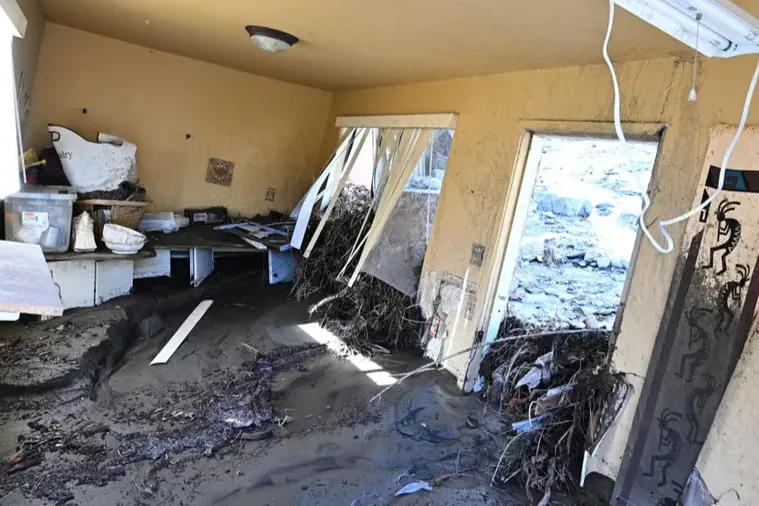
Pinellas Park sits on flat, low ground with a high water table, so rain does not drain away fast. When Joe's Creek or a canal runs full, water that reaches a yard can reach a garage and then a floor.
Key takeaways
- Flat land and a high water table mean heavy rain drains slowly, so standing water is the first problem after a big storm.
- Water that came from a yard, a creek or a drain is treated as Category 3, and wet porous materials usually come out.
- Extraction comes first, because the longer water stands the further it wicks into drywall, baseboards and cabinets.
- Drying continues after the standing water is gone, and moisture readings decide when the equipment comes out.
- Photos of the water level and the damage, taken before anything moves, keep a clear record for repairs.
Why water lingers on Pinellas Park ground
The land here is flat, the ground sits low and the water table is high. The soil has little room to take in a heavy rain, so water stays on the surface longer than it would on higher ground.
Drainage runs through Cross Bayou and Joe's Creek, and through canals that were cut starting in 1915. The Pinellas Park Water Management District was created in 1976 by the Florida Legislature to manage that drainage, and it works across five drainage basins.
How the drainage system works
Creeks, canals and basins carry rain water away from streets and yards. When storms follow one another, the channels fill and the water slows down in the low spots.
That slowdown is what turns a wet yard into a wet doorway.
What it means for a ranch home
Many homes here are concrete block ranch homes on slabs, mostly built from the 1950s to the 1980s.
A slab home has no crawl space between the floor and the ground, so water that reaches the walls reaches the floor.
- Garages and laundry rooms usually sit nearest the door thresholds where water enters.
- Door bottoms, sliders and garage doors are the first places water gets in.
- Water that stands against block walls can seep through at the base.
Hurricane Milton and Joe's Creek: a recent reminder
Hurricane Milton in October 2024 dropped close to 20 inches of rain on parts of Pinellas County. The storm also eroded the banks of Joe's Creek.
That erosion is a reminder that the drainage system takes a beating when the rain is heavy, and that a creek bank is part of the protection a neighborhood relies on.
Heavy rain is not limited to hurricanes. The rainy season runs from June to September with daily thunderstorms, and hurricane season runs from June 1 to November 30.
Wind driven rain through a roof or window is a different job from water rising at the door, and it is handled as hurricane and storm water damage.
How flood water cleanup differs from a leak
Rain that leaks through a roof is fairly clean when it lands on a ceiling. Water that crosses a yard, a driveway or a street picks up soil, waste and bacteria on the way in.
For that reason the restoration team treats flood water as Category 3, the most contaminated class. Anything porous that soaked it up is a candidate for removal, not drying.
A full flood water cleanup removes the wet materials, cleans and treats what stays and then dries the structure.
- Carpet and pad come out, because they cannot be cleaned well once soaked.
- Drywall and insulation come out above the wet mark, where water has wicked upward.
- Baseboards and cabinet bases that stayed wet are removed or opened.
- Tile, sealed concrete and other hard surfaces are cleaned and treated instead of removed.
The first day: what to do and what to leave alone
The first hours are about safety and records. Pulling the standing water out is the work of water extraction, using truck mounted and portable units that move far more water than towels and a wet vacuum.
Safety first
- Stay out of standing water until the power to that area is off at the panel.
- Do not run household vacuums, fans or space heaters on a wet floor.
- Keep kids and pets away from the water and from wet materials.
- Wear boots and gloves if anyone has to walk through the water.
Document and protect
Photograph the water level on walls and furniture before anything moves. Wide shots and close shots both help.
- Lift small items, electronics and papers onto dry surfaces.
- Leave heavy furniture where it is until the crew has checked the floor under it.
- Write down which rooms were wet and when the water was found.
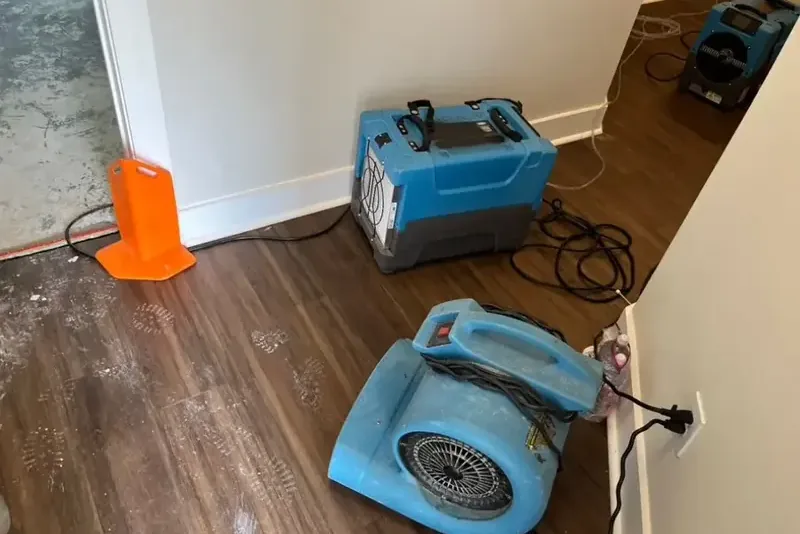
Drying after the water is gone
Removing standing water is only half the job. Concrete slabs, block walls and wood framing hold moisture and release it slowly.
The drying team sets air movers and dehumidifiers and takes moisture readings every day. The equipment stays until the readings come back to normal.
Mold can start to grow on wet materials within 24 to 48 hours, which is why drying does not wait. Larger jobs add structural drying and dehumidification with daily logs.
- Readings are taken in walls, flooring and framing, not just on the surface.
- Equipment moves as each area reaches its dry goal.
- The job ends when the readings, not the calendar, say the structure is dry.
Where to look first in ranch homes and manufactured homes
Ranch homes and manufactured homes share the same early warning spots. Large manufactured home communities run along US 19, 49th Street and Park Boulevard, so the same list works for both kinds of home.
- The garage floor and the wall between the garage and the house.
- The laundry room, the water heater closet and the floor around sinks.
- The floor near every exterior door and slider.
- Cabinet bases and baseboards, which hold water long after the floor looks dry.
- In a manufactured home, the floor near exterior doors and the space under the home where it can be reached.
What the restoration team records on a flood job
A flood job produces paperwork as well as clean floors. The records show what the water touched and what was done about it.
Those records are useful later, when repairs are priced and when a neighbor, a landlord or a lender asks what happened.
- Photos of each room before removal starts.
- The water category and the drying class for each area.
- A list of the materials that were removed and where they came from.
- Daily moisture readings until each area reaches its dry goal.
Questions
Is creek or drain water in a house considered contaminated?
Yes. Water that comes from outside picks up soil and bacteria, so it is treated as Category 3. The team removes porous materials that soaked it up and cleans and treats everything that stays.
How fast does flood water damage drywall and flooring?
Damage starts right away. Drywall and baseboards pull water upward, and wood flooring can swell and cup. Mold can start within 24 to 48 hours, so extraction and drying move quickly.
Should the power stay on in a flooded room?
No. Power to the wet area should be shut off at the panel, and outlets that were under water should be checked by an electrician before anyone uses them.
Can a flooded house be dried without cutting drywall?
Sometimes, when the water was clean and the drywall is only damp. With flood water from outside, wet drywall and insulation are usually removed so the cavity can be cleaned and dried.
What should be written down before cleanup starts?
The rooms that were wet, the height of the water, when it was found and the items that were damaged. Photos work best when each room gets one wide shot and several close ones.