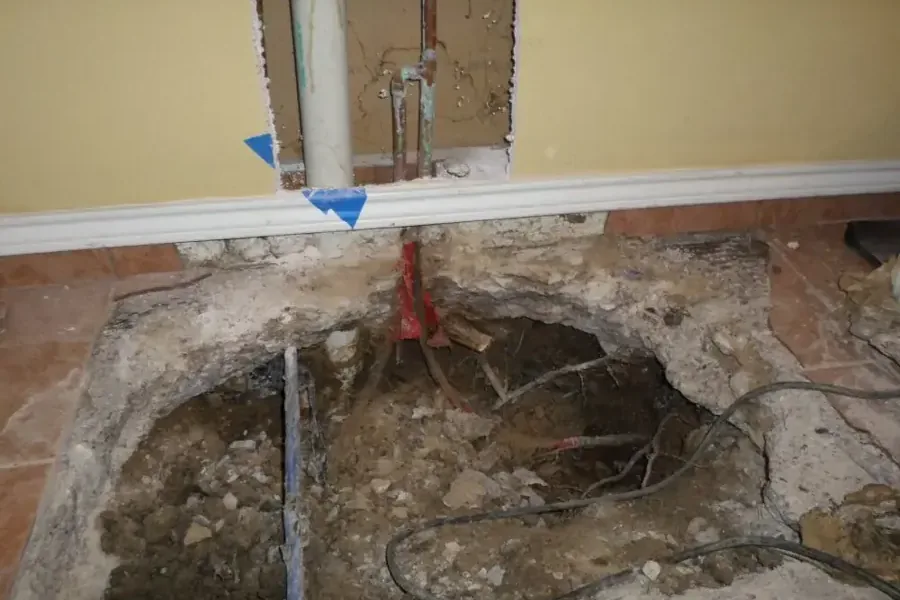
Many Pinellas Park homes are concrete block ranch homes built on slabs, mostly from the 1950s to the 1980s. The pipes that serve them run under that concrete, and a leak there can soak flooring long before anyone sees water.
Key takeaways
- Copper supply pipe and cast iron drain pipe under a slab can both leak, and they leave different clues.
- A supply leak shows up as constant water use, a warm or damp floor spot or the sound of running water.
- A drain leak shows up after water is used, with damp spots, odor and stains near drains.
- A plumber finds and repairs the leak first, and the restoration team lifts wet flooring and dries the slab and wall bottoms.
- A water meter test with every fixture off is the simplest first check.
What a slab leak is
A slab leak is a leak in a pipe that runs under or inside a concrete slab floor. In a slab home there is no crawl space, so the pipes sit in or beneath the concrete.
In a house on a slab the floor is not a separate layer over empty space. Flooring sits directly on the concrete, so water that reaches it has few places to go except sideways under the flooring.
Water from the leak can rise through cracks and joints, travel under flooring and wick into the bottoms of walls.
Because it is hidden, a slab leak is usually found by its effects: a bill, a sound, a warm spot or a damp floor.
Signs to watch for
Any one of these signs can have another cause, so the meter check below helps sort them out.
Several signs together are stronger evidence than one. A rising bill with a warm spot and a hissing sound points toward a pressurized supply pipe.
- A water bill that climbs with no change in how the household uses water.
- The sound of running water when every fixture is off.
- A warm spot on the floor, which can point to a hot water pipe.
- Damp, discolored or lifting flooring, or tile with new cracks.
- Wet baseboards or a musty odor in one part of the house.
- A water heater that runs more than usual.
Copper supply leaks and cast iron drain leaks
Homes of this era can have both kinds of pipe under the floor. Copper supply pipe brings water in, and cast iron drain pipe under older slabs carries waste water out.
Copper supply pipe
Copper carries pressurized water to the fixtures. A pinhole or a failed joint under the slab leaks all the time, whether or not anyone is using water.
- Constant use shows on the water meter.
- Hissing or running sounds come from the floor.
- A warm floor spot can mean the leak is on a hot water pipe.
Cast iron drain pipe
Cast iron carries waste water away from sinks, tubs and toilets. In older homes it runs under the slab, and it can crack or corrode over time.
Cast iron lasts a long time, but older iron can rust through where waste water sits.
A drain leak only shows up when water is draining, so the clues appear after a shower or a load of laundry. That water is contaminated, which changes how the cleanup is handled.
- Damp spots or stains that grow after drains are used.
- A sewer odor in one room.
- Moisture seeping at a crack in the slab.
Who does what: finding the leak, fixing it and drying
A plumber uses listening gear, pressure tests or a camera to find the leak, and then repairs or reroutes the pipe. The restoration team cannot dry a floor while a leak is still wetting it.
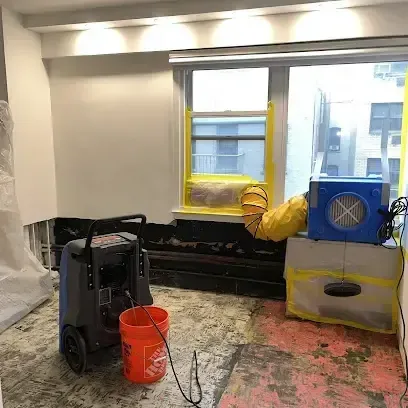
Once the plumber is done, the team lifts the wet flooring, takes off baseboards, opens wall bottoms where needed and starts the drying.
That sequence is the core of slab leak water damage work. A leak inside a wall instead of under the floor falls under burst pipe water damage.
Standing water on top of the slab is removed first with water extraction, so the floor is not soaking while the pipe is traced.
- Listening gear finds the sound of a pressurized leak.
- A camera inspects the inside of a drain pipe.
- Pressure tests show whether a supply pipe holds.
Drying a slab home
Concrete holds moisture and gives it up slowly, so a slab leak can need longer drying than a spill on the same floor.
The drying team uses LGR dehumidifiers and sometimes desiccant units, with air movers across the floor and the wall bottoms. Structural drying continues until the slab, the walls and the flooring that stays all read dry.
Moisture can also move sideways. Floors beside the wet room are checked, because water under flooring does not stop at a doorway.
Mold can start to grow within 24 to 48 hours on wet materials, so the drying starts as soon as the leak is repaired.
- Wet carpet and pad are removed.
- Laminate and engineered wood usually come up, because they swell.
- Tile can often stay in place when the slab below it is dried.
- Moisture readings are taken in the slab, the walls and the flooring each day.
What a slab leak does to flooring
Flooring takes the first hit, and each type reacts in its own way. The team checks the type before deciding what lifts.
- Carpet and pad hold water and are removed.
- Laminate and engineered wood swell and cup, and usually come up.
- Solid wood can cup, and some jobs allow it to be dried in place.
- Tile usually stays, but the edges and the slab below it are checked.
What to do today if a slab leak is suspected
The simplest test needs no tools. It uses the water meter.
- Turn off every fixture and appliance that uses water.
- Read the water meter, wait a short while without using water and read it again.
- If the reading moved, a leak is likely, so shut off the main water supply.
- Photograph any damp flooring, stains or cracks.
- Have a plumber locate the leak, then arrange the drying.
Questions
How can a homeowner tell a slab leak from a spill?
A spill dries and stays gone. A slab leak keeps coming back, with a damp or warm spot, a rising bill or the sound of running water that does not match any fixture.
Is a cast iron drain leak different from a copper leak?
Yes. A copper leak is pressurized and constant. A cast iron drain leak appears only when water is draining, and its water is contaminated, so the cleanup treats it with more care.
Does flooring have to come up for a slab leak?
Often. Carpet, pad, laminate and wood usually come up so the slab and the wall bottoms can dry. Tile can often stay in place when the slab below it is dried.
How long does a slab take to dry?
Concrete releases moisture slowly, so a slab can take longer than other materials. Daily moisture readings decide when the equipment comes out.
Who fixes the leak?
A plumber locates and repairs the pipe. The restoration team removes the water damage and dries the structure after the repair.
Can a slab leak lead to mold?
Yes, once materials stay wet. Mold can start within 24 to 48 hours on wet flooring, wall bottoms and baseboards, which is why drying should start as soon as the pipe is repaired.