A sewage backup inside a house and a sewer overflow in a public street are different problems. Seminole has had the second kind in the news, and the first kind needs its own cleanup.
Key takeaways
- A public overflow and a backup inside a home are separate events, and only a backup puts sewage on the floor.
- Pinellas County Utilities says property owners maintain their private sewer lateral from the home up to the edge of the property.
- Sewage is Category 3 water, so porous materials that touched it are removed rather than dried.
- The city's storm drains are separate from the sanitary sewer and carry rainwater only.
- Stop using water, keep people and pets out and photograph the damage before anything is moved.
What a sewage backup is, and what it is not
A sewage backup happens when waste water comes up through a toilet, tub, shower or floor drain instead of going down. The water that comes up is Category 3, which means it carries bacteria and must be handled with protective gear.
Sewage is more than unpleasant. It can carry bacteria, viruses and parasites, which is why a backup is never treated like a spilled bucket of water.
The cause can be a clog in the home's own pipe or a problem farther down the system. The cleanup is the same either way, because the water on the floor is what the cleanup deals with.
The first hours matter. Sewage soaks into carpet pad and drywall quickly, and the longer it sits the more material has to come out.
- Slow drains in several fixtures at once.
- Gurgling from a toilet or floor drain when water runs somewhere else.
- Sewage odor near a floor drain or in a bathroom.
- Water rising in a tub or shower when the washer drains.
- Wet spots around a floor drain with no obvious source.
Overflows that made the news
On November 14, 2020, five manholes along Seminole Boulevard overflowed after a pump lost power, and nearly 200,000 gallons of wastewater flowed into Lake Seminole.
After Hurricane Milton in October 2024, power outages at lift stations and flooding caused sewer overflows in the area, including one of 2,016,000 gallons that affected the lake.
Neither event is described as a backup inside a home. They do show how a lost pump can push a sewer system past its limit.
Overflows and backups also differ in where the sewage goes. A manhole overflow sends flow into a street, a ditch or a lake, while a backup sends it up the lowest drain in a building, often a bathroom or a laundry room floor drain.
A county sewer pipe also runs from a pump station at Park and Seminole boulevards to the South Cross Bayou Water Reclamation Facility, a permitted advanced treatment plant for south Pinellas County.
In 2016 Pinellas County planned to replace a 20 inch sewer pipe that was more than 50 years old and had failed twice in the previous five years.
Who maintains what, and what stays separate
Pinellas County Utilities says property owners maintain their private sewer lateral from the home up to the edge of the property. A homeowner can ask the utility that serves the address where that boundary sits.
The city's storm drains are a separate system. They carry only rainwater to ponds and lakes that drain toward the Gulf and Tampa Bay.
Where a blockage sits matters, so a plumber's camera report that shows the location is worth keeping with the other records.
- A flooded street drain is a rain water problem, not a sewage backup.
- A backup inside the home is a problem in the sanitary sewer or the home's own pipe.
- Both can happen in one storm, which is why the source of the water is checked first.
What sewage backup cleanup involves
The work follows a set order. Sewage backup cleanup starts with containment, moves to removal and ends with cleaning and drying.
Containment and removal
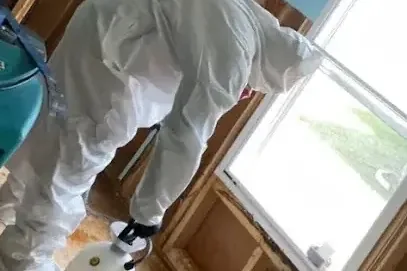
The restoration team seals off the area, puts on protective gear and removes the water with extraction equipment.
Plastic sheeting and negative air keep odors and particles from moving into clean rooms.
- Carpet and pad are removed and discarded.
- Drywall is cut above the wet mark.
- Baseboards, insulation and cabinet bases that touched sewage come out.
Cleaning and drying
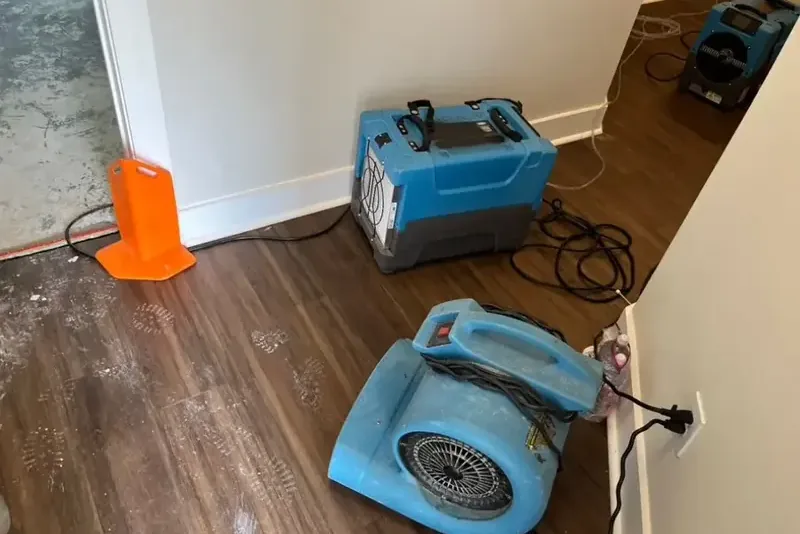
Hard surfaces are cleaned and treated, and then the area is dried with air movers and dehumidifiers.
Moisture readings show when the structure is dry, and the equipment stays until they do.
The first steps at home
These steps keep the problem from spreading while emergency sewage cleanup is arranged.
- Stop using sinks, toilets, showers and the washer.
- Keep people and pets out of the affected rooms.
- Turn off power to wet areas if water is near outlets.
- Photograph the affected rooms before anything is moved.
- Do not use a household vacuum on sewage water.
When rain and sewage meet
Pinellas County says low lying areas in the Lake Seminole region flood frequently. When rain and a sewer problem arrive together, the water on the floor is treated as sewage first.
Sorting out the source matters, because a flooded yard that sends water under a door is handled differently from sewage rising through a drain.
Flooding with no sewage involved falls under flood water cleanup, and local water damage restoration can sort out which kind a home has.
After the cleanup: what to expect
Sewage jobs end with a clean, dry structure, but the home is not finished until the cause is fixed and the removed materials are replaced.
- Odor fades as soaked materials leave and surfaces are treated.
- A plumber should clear or repair the cause before fixtures are used again.
- Flooring, drywall and baseboards are replaced once the structure reads dry.
- Photos and notes from the first day stay with the repair records.
- Receipts and notes from the plumber stay with the cleanup records, because the pipe findings belong together with them.
Questions
Is sewage water dangerous to touch?
Yes. It is Category 3 water and can carry bacteria and viruses. Skin contact, splashes and breathing mist from cleaning should be avoided, and the cleanup is done with protective gear.
Can carpet and drywall be saved after a sewage backup?
Porous materials that soaked up sewage are usually removed because they cannot be made clean. Hard surfaces are cleaned and treated, and the structure is dried.
Does a storm drain overflow mean the sewer is backing up?
No. Storm drains and the sanitary sewer are separate systems. A street full of rain water points to drainage, while sewage in a tub or toilet points to the sanitary sewer or the home's own pipe.
Who maintains the pipe from the house to the street?
Pinellas County Utilities says owners maintain the private lateral from the home up to the edge of the property. Which utility serves a given address is worth confirming before work is planned.
What should be documented before cleanup starts?
Photograph the affected rooms and note which fixtures backed up and when. Do this before anything is moved, and keep damaged items until they have been recorded.
Can a sewage backup be cleaned with household products?
Household cleaners do not make porous materials safe after sewage. The restoration team removes what cannot be cleaned and treats the surfaces that stay, which is a different job from a bathroom scrub.