Ceiling Leak Water Damage in Dunedin, FL
A stained or sagging ceiling means water is above it, whether from the roof, an air handler or a plumbing pipe. The crew finds the source, opens the wet section and dries the cavity in Dunedin homes.
☎ (888) 621-2041Dunedin ceiling leak help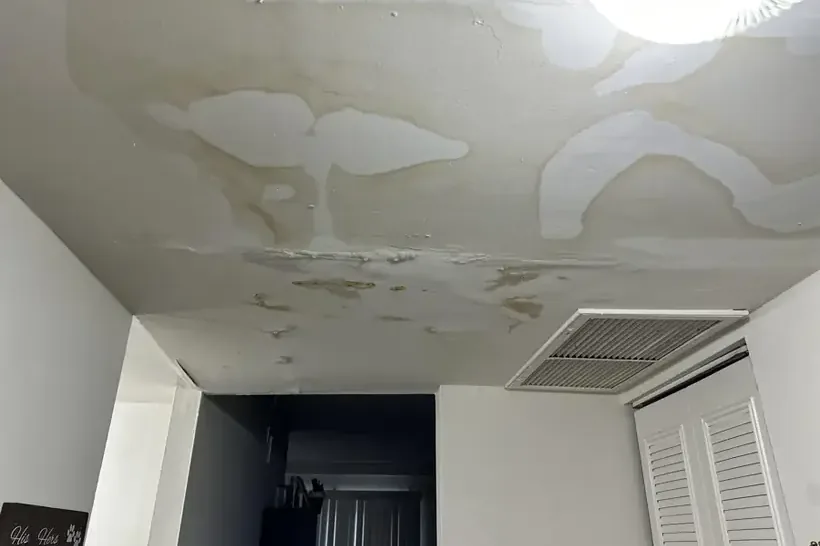
First steps for ceiling leak water damage
- Clear the room below. Move furniture and electronics out from under the stain and set a bucket under any drip.
- Protect the lights. Water in a ceiling fixture is dangerous, so switch off the circuit and avoid touching it.
- Mark the stain. Trace the stain edge in pencil and note the time, so growth is easy to see.
- Photograph the damage. Take wide and close photos of the ceiling, the floor below and any dripping water.
Ceiling damage looks like a surface problem, but the water behind it is the real issue. By the time a stain turns brown or the drywall bows, the insulation above has usually been wet for a while, and the framing is picking up moisture.
What does ceiling leak water damage cost in Dunedin, FL?
Ceiling leak cost follows how much drywall comes out and whether the water reached the walls or floor. A small stain caught early stays at the low end, and a whole room ceiling costs more.
Small stain, caught early
$1,000 to $2,000- Small opening cut
- Wet insulation out
- Joists dried
One room ceiling
$2,000 to $4,000- Ceiling drywall out
- Walls checked and dried
- Floor protected
Ceiling plus walls and floor
$4,000 to $6,000+- Several cavities opened
- Flooring dried
- LGR dehumidifiers
Ranges are typical, not a quote: the category of water, square footage, material class and how fast drying started move the number most. Run the water damage cost calculator for a closer range.
How ceiling leak water damage is handled, step by step
Locate the water
A moisture meter and thermal camera map the wet area and point toward the source above.
Open and drain
A small opening releases trapped water, and wet drywall and insulation are cut out and bagged.
Dry the cavity
Air movers and dehumidifiers run until joists, drywall edges and walls below read dry.
Document the dry-out
Daily readings and photos show the leak stopped and the structure is dry before any repair.
Three common sources
- The roof, after storm rain finds a weak spot
- An air handler or condensate drain in the attic
- A supply pipe or drain above the ceiling
- A bathroom or laundry fixture on the floor above
The humid subtropical climate keeps air conditioners working and attics damp, so a ceiling leak can come from the roof, an air handler or a pipe, and each one calls for a different repair.
Many ceiling leaks are not one event. A drip that returns after every rain, a stain that spreads after the air conditioner runs, or a spot that grows after a shower all point to a repeating source, and drying cannot hold unless it is fixed.
What the crew does first
A moisture meter and thermal camera show how far the water spread before any cutting starts. The crew then makes the smallest opening that reaches the wet insulation, drains any trapped water into a bucket and removes the soaked material. That limits the mess and keeps the rest of the ceiling intact.
Why wet drywall cannot just be painted
Paint over a stain hides the problem without drying it. Wet drywall softens, grows mold and can fall, and wet insulation holds water against the joists. Opening the section lets air reach the cavity, and dehumidifiers pull out what air alone cannot.
Drying and documenting
- Air movers aimed into the open cavity
- Dehumidifiers matched to the room size
- Walls and floor below checked for moisture
- Daily readings logged until framing is dry
When the source is the roof or the air conditioner, roof leak work or AC leak work follows the same drying plan, and the same records support the claim.
Ceiling leak water damage across Dunedin and nearby
Ceiling leak work covers the whole city, including downtown, Baywood Shores and Dunedin Isles, plus the blocks along Louden Avenue and Douglas Avenue, in ZIP codes 34698 and 34697.
The same service nearby: ceiling leak water damage in Pinellas Park, Clearwater, Safety Harbor.
Related water damage services in Dunedin
Ceiling Leak Water Damage questions
Can a ceiling stain just be painted over?
No. Paint hides the stain but leaves wet insulation and framing behind, and the stain returns as moisture works through. The cavity has to be opened and dried first.
How can the source be found?
A thermal camera and moisture meter show where the water spread, and the pattern points to the roof, the air handler or a pipe. The repair trade for that source then fixes it.
Is a sagging ceiling dangerous?
Yes. Wet drywall is heavy and can fall without warning, and water near a light fixture adds an electrical risk. Keep people out from under it until it is opened.
How much of the ceiling comes out?
Only the wet section, plus a margin of dry drywall around it so the new edge has solid backing. Keeping the opening small keeps the repair simple.
How long before the ceiling can be repaired?
Repairs begin after readings show the framing and drywall edges are dry, which is often a few days. Closing a wet cavity can bring the stain back.
Will insurance cover a ceiling leak?
Sudden leaks are often covered, while slow seepage is often excluded. The adjuster decides, so start the photos and readings as soon as the stain is noticed.
Water above the ceiling keeps working downward
A stain is only the visible edge of wet insulation and drywall, so one call stops the damage from reaching walls and floors.
☎ (888) 621-2041Get the ceiling dried