Ceiling Leak Water Damage in Seminole, FL
A ceiling stain means water is sitting above it, in insulation, framing or the unit upstairs. The crew traces the source, opens the ceiling where it is wet and dries the cavity before the damage spreads.
☎ (888) 621-2041Ceiling stain growing? Call the drying team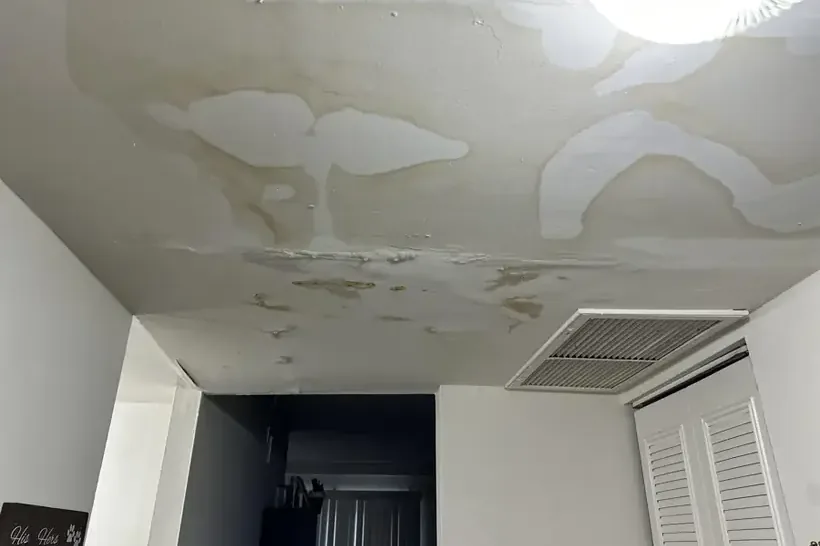
First steps for ceiling leak water damage
- Contain the water. Put a bucket under any drip and move furniture aside. Poke a small hole in a bulging spot so it drains.
- Switch off power. Turn off breakers for rooms below the leak, including lights and fans.
- Find the source. Check the room above, the attic and the air handler. In a condo, tell the property manager.
- Photograph it. Capture the stain, drips and any fallen material before cleanup starts.
Condominium and apartment communities such as Woodbridge, Timberwoods, the Townhomes of Lake Seminole and The Courtney at Bay Pines, which has 330 apartments, are part of the local housing mix, and in them a ceiling leak can come from the unit above. Houses get the same stains from roofs, air handlers and pipes.
What does ceiling leak water damage cost in Seminole, FL?
Ceiling leak work runs $1,000 to $2,000 for a small stain caught early, $2,000 to $4,000 for one room's ceiling, and $4,000 to $6,000 or more when walls and floors are also wet.
Small stain, caught early
$1,000 to $2,000- Small opening cut
- Wet insulation out
- Joists dried
One room's ceiling
$2,000 to $4,000- Drywall cut out
- Walls checked and dried
- Floor covered
Ceiling, walls and floor
$4,000 to $6,000+- Several cavities opened
- Flooring dried
- LGR dehumidifiers
Ranges are typical, not a quote: the category of water, square footage, material class and how fast drying started move the number most. Run the water damage cost calculator for a closer range.
How ceiling leak water damage is handled, step by step
Trace the source
A meter and thermal camera find where the water entered and how far it spread.
Open and remove
Drywall is cut to dry edges and wet insulation comes out, with the floor covered against falling debris.
Dry the cavity
Air movers and a dehumidifier dry joists and wall tops until readings match dry wood.
Close the record
Final readings and photos are saved so the contractor can close the ceiling.
When the leak starts in another unit
In a condominium or apartment building, the first call is usually to the property manager or association, because the source may be a neighbor's pipe, washer or air handler. The drying crew documents the damage in the lower unit, finds the edge of the wet area and dries it, while the owners and manager sort out who is responsible.
What opening a ceiling involves
A small relief hole lets trapped water drain, then drywall is cut back until the edges read dry. Insulation above is removed when soaked, and joists are dried in place.
- Sagging drywall cut out in squares, not pulled down in sheets
- Wet insulation bagged and removed from the cavity
- Light fixtures and fans checked for water before power returns
- Walls and floors below scanned for moisture that traveled
Sources worth ruling out
Overhead water can come from a roof, an AC condensate drain, a supply pipe or the bathroom above. A roof leak, an AC leak and a burst pipe each leave a different pattern of wet materials, so the source decides the dry-out plan. Drying a ceiling without stopping the source only delays the next stain, so the search for the cause starts on the first visit.
Why ceilings fall
A ceiling does not fail all at once. Drywall weakens as it soaks, the screws pull through, and a bulge forms that can hold gallons. One small hole lets the water out in a controlled way, which is far safer than waiting for the section to drop. Damp drywall and insulation can also start growing mold in 24 to 48 hours.
Ceiling leak water damage across Seminole and nearby
Ceiling work runs across houses and condos citywide, from The Gardens, Orangewood and Parkwood to Lake Pearl Estates and Sandy Woods, and along Park Boulevard and 113th Street North.
The same service nearby: ceiling leak water damage in Pinellas Park, Clearwater, Safety Harbor.
Related water damage services in Seminole
Ceiling Leak Water Damage questions
Should a sagging ceiling be popped?
A controlled small hole is safer than waiting. It drains the trapped water, relieves weight on the drywall and shows whether the insulation above is soaked. Stay out from under a heavy bulge.
Who pays when the leak comes from the unit above?
That depends on the building rules, the policies involved and who is at fault, and the property manager or association usually coordinates it. The drying crew documents the damage so any claim has clear evidence.
Is a ceiling stain always a roof leak?
No. Roofs, AC condensate drains, supply pipes, a bathroom above and neighboring units all cause stains. A moisture meter and thermal camera help separate them by pattern and location.
Can a stained ceiling be painted over?
Not before it is dry. Paint over damp drywall and insulation traps moisture, and the stain usually bleeds through. Readings should show dry materials first.
How long does a ceiling take to dry?
Small openings often dry in a few days, and larger wet areas take longer. Daily readings, not the calendar, decide when equipment comes out.
What gets replaced after a ceiling leak?
Drywall that sagged, stained or stayed wet is replaced, along with wet insulation. Dry framing stays, and a contractor patches, textures and paints once the readings are clear.
A wet ceiling gets worse overhead
Water above a ceiling keeps working on drywall and insulation. The crew traces the source, cuts back what is wet and dries the framing before the stain spreads.
☎ (888) 621-2041Reach the drying team