Mobile Home Water Damage in Clearwater, FL
Clearwater has 3,922 mobile homes, and their thin floors let a small leak turn into a swollen subfloor fast. The drying team checks the belly, opens the floor where needed and dries the framing.
☎ (888) 621-2041Call about mobile home water damage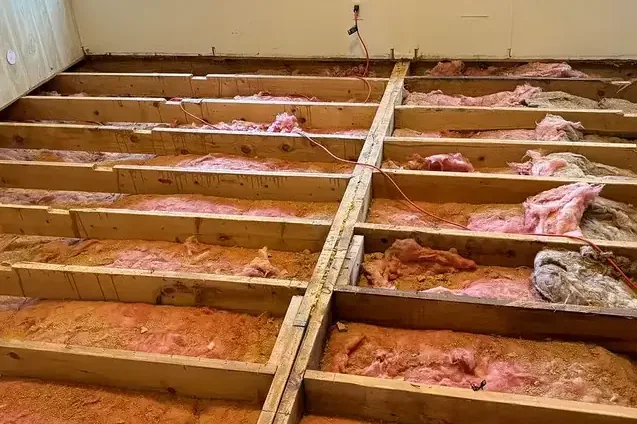
First steps for mobile home water damage
- Stop the water. Close the shutoff at the unit or the main, and keep the area from taking more.
- Cut power to wet rooms. Turn off the breaker for any area where water reached outlets.
- Lift items off the floor. A soft or swollen floor can give way, so keep weight off it and move furniture to dry ground.
- Photograph the floor and the ceiling. Capture swollen spots, stains and the leak source.
A manufactured home carries its floor, insulation and plumbing in a thin sandwich, so water reaches the subfloor and the belly quickly. Particleboard swells when it stays wet, and a swollen floor softens before it looks damaged. Because the structure is light, even a small amount of extra moisture can change how it feels underfoot.
What does mobile home water damage cost in Clearwater, FL?
A leak caught early in one room often runs $1,500 to $3,000, and a belly-wide loss can pass $9,000. How much subfloor is swollen and how much belly insulation is wet decide the price.
One room, caught early
$1,500 to $3,000- Water pulled up
- Belly checked
- Floor dried
Subfloor section replaced
$3,000 to $6,000- Swollen board cut out
- Wet insulation removed
- Joists dried
Several rooms or belly-wide
$6,000 to $9,000+- Belly wrap opened
- Several floor sections
- Walls dried
Ranges are typical, not a quote: the category of water, square footage, material class and how fast drying started move the number most. Run the water damage cost calculator for a closer range.
How mobile home water damage is handled, step by step
Extract and inspect
Surface water is removed, and the belly is checked from below for wet insulation.
Open what is wet
Soft subfloor and soaked insulation are cut out, with the joists left in place.
Dry the framing
Air movers and dehumidifiers run through the floor and belly until joists read dry.
Hand off the repair
Readings and photos show the floor is ready to be rebuilt.
A local case, not a rare one
With 3,922 mobile homes in the city, a leak or flood in a manufactured home is a case the crew plans for. The equipment and the access change from home to home, but the drying goals do not.
What the belly holds
Underneath the floor sits a space most owners never see.
- Insulation that soaks up water and holds it against the floor.
- A wrap or bottom board that can trap moisture.
- Ductwork and supply pipes running between the joists.
- Joists and rim framing that must be dried before repairs.
Belly checks are done from below when access allows, and a small opening is cut only where readings call for one.
When the subfloor has to come out
Particleboard that has swollen or lost its hardness is cut out in sections and replaced after the joists dry. Plywood that stays firm can often be dried in place, which saves time and cost. The joists then dry under structural drying equipment.
Leaks from above
Roof and window leaks after storms soak ceilings, walls and then the floor below. The drying plan covers each layer in turn, from the ceiling cavity down to the belly beneath. The roof side is covered under roof leak water damage.
Mobile home water damage across Clearwater and nearby
Mobile home drying is available throughout the city, from the harbor side to the inland neighborhoods, and the crew adapts its equipment to each home's layout and the access around it.
The same service nearby: mobile home water damage in Pinellas Park, Dunedin, Safety Harbor.
Related water damage services in Clearwater
Mobile Home Water Damage questions
Why does a mobile home floor swell so fast?
Many manufactured floors use particleboard, which absorbs water and swells within a day or two. Quick extraction and drying can keep it from softening.
Can the subfloor be dried in place?
Sometimes. Firm, lightly wet board can dry under equipment, but swollen or crumbling particleboard is cut out and replaced.
What is the belly and why does it matter?
It is the insulated space under the floor, closed in by a wrap or bottom board. Wet insulation there holds water against the floor, so it is checked and removed.
Does a mobile home leak need different equipment?
The equipment is the same, but it is set differently. Smaller rooms and thin floors mean fewer, carefully placed units and close monitoring.
Is a roof leak common in a manufactured home?
A roof or window leak can happen in any home. In a mobile home, the water reaches the floor structure sooner, so the ceiling, walls and floor are all checked together.
How long does a mobile home take to dry?
Most jobs reach their goals in three to five days, with longer times when the belly or subfloor took a lot of water.
A thin floor cannot wait long
Particleboard softens as it stays wet, so an early call can keep a small section from becoming the whole floor.
☎ (888) 621-2041Call the drying team