Water Extraction in Clearwater, FL
Standing water left by a storm, a failed hose or a flooded garage is pulled out first, so drying equipment works on wet materials instead of fighting a puddle. The extraction crew measures as it goes.
☎ (888) 621-2041Call about standing water now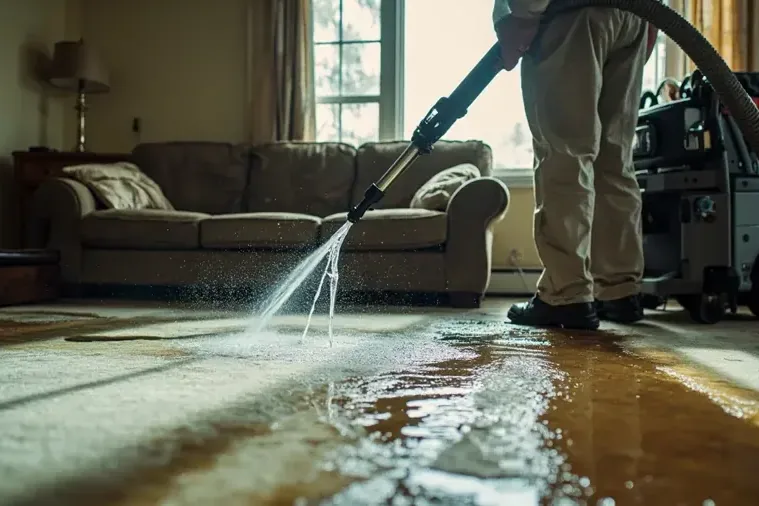
First steps for water extraction and removal
- Stop the source. Close the valve or main shutoff, and keep people out of rooms where water meets outlets or cords.
- Switch off wet circuits. Flip the breakers for soaked areas at the panel, and avoid walking through water near a plugged-in appliance.
- Lift what can be lifted. Move small furniture, rugs and electronics to dry ground so the extractor can reach the whole floor.
- Photograph the water. Capture the depth, the source and the damaged items before extraction starts.
The city sits between the Gulf of Mexico and Tampa Bay, with Clearwater Harbor and a handful of named creeks nearby, so standing water here usually starts with a storm, a high tide or a failed fixture. Extraction is the first job on every one of those losses, and it sets the pace for everything that follows.
What does water extraction and removal cost in Clearwater, FL?
A clean-water room often costs $700 to $1,800 for extraction alone, and the figure climbs with depth, floor area and water category. Contaminated water adds removal and treatment on top of the extraction.
One room, clean water
$700 to $1,800- Carpet or tile water pulled
- Meter readings logged
- Fans positioned
Several rooms
$1,800 to $3,500- Truck-mounted passes
- Wet pad lifted
- LGR units running
Most of the house or Category 3
$3,500 to $9,000+- Contaminated water out
- Carpet and pad removed
- Antimicrobial applied
Ranges are typical, not a quote: the category of water, square footage, material class and how fast drying started move the number most. Run the water damage cost calculator for a closer range.
How water extraction and removal is handled, step by step
Gauge the water
Depth, source and category are checked first, since black water changes what can be saved.
Protect the path
Floor protection and furniture blocks go down before the extractor moves through the rooms.
Extract in passes
Truck-mounted units and wands work the floor in overlapping passes until water stops returning.
Hand off to drying
Readings are mapped so dehumidifiers and air movers start from what is still wet.
Why the water comes out before the fans go in
Air movers and dehumidifiers dry surfaces, not pools. Left standing, water forces the equipment to evaporate what an extractor could have lifted in a single pass. Starting with extraction also shortens the whole job, because every gallon pulled out by machine is a gallon the dehumidifiers never have to handle.
- Truck-mounted units pull the most water from carpet and wide floor areas.
- Portable wands reach stairs, closets and upper floors.
- Pad and wet carpet edges are lifted where extraction alone cannot finish the job.
- Readings follow, so the structural drying plan starts from measured numbers.
Storm surge and flood water
Idalia put a 4.8 foot surge on Clearwater Beach in 2023, and in 2024 Milton's storm flooded one local apartment complex badly enough that 565 people needed rescue. Water like that carries silt and sewage, so it is treated as Category 3: extracted first, then followed by flood water cleanup and removal of porous materials.
Clean leaks and overflows
A split supply hose, an overflowing tub or a failed water heater starts as clean water. Extraction right away keeps it from turning gray as it soaks into pad and baseboards, and it often saves flooring that would otherwise come out. Hardwood and engineered planks respond best when extraction begins before the boards start to swell.
What gets checked afterward
- Moisture in the subfloor under the area that was wet.
- The lower wall cavities along the affected rooms.
- Furniture legs, cabinet bases and door casings.
- Any pad or carpet that stayed soaked after the pass.
- Baseboards and door jambs where water wicks upward.
Water extraction and removal across Clearwater and nearby
Extraction crews work across the city, from Island Estates and Harbor Oaks near the water to Countryside and North Greenwood inland, and on both sides of Keene Road and State Road 60.
The same service nearby: water extraction and removal in Pinellas Park, Dunedin, Safety Harbor.
Related water damage services in Clearwater
Water Extraction and Removal questions
How much water can be pulled out of carpet?
Truck-mounted units lift most of the water from carpet and pad, which is why extraction happens before anything else in the dry-out. Pad that stays soaked or took dirty water usually comes out afterward.
Is surge water handled differently from a leak?
Yes. Surge carries silt, sewage and debris, so it counts as Category 3. The crew extracts it, then removes carpet, pad and wet drywall instead of trying to save them.
Can extraction start before the leak is fixed?
Usually, once the valve is shut or the flow is controlled. Water that keeps coming undoes the work, so stopping the flow comes first whenever that is possible for the household.
Does extraction work on hardwood and tile?
Yes, with low-profile wands and floor mats. Tile gets surface water removed and the grout checked, while wood floors need fast extraction and close monitoring to limit cupping.
Does the crew need the whole house open?
Only the wet areas and the path to them. Floor protection goes down on the way in, and furniture is raised onto blocks instead of dragged across wet carpet or tile.
Is extraction enough to dry the house?
Not alone. It removes the bulk water, but walls, subfloor and pad still hold moisture, so dehumidifiers and air movers follow until readings reach the dry goal in every layer.
Standing water should not sit
Each extra day lets moisture climb into walls and subfloor, so an early call keeps the job smaller.
☎ (888) 621-2041Call the extraction crew