Structural Drying in Clearwater, FL
After the standing water is gone, framing, subfloor and concrete still hold moisture. The drying team sets air movers and dehumidifiers from meter readings and keeps them running until every material reaches its dry goal.
☎ (888) 621-2041Call about drying equipment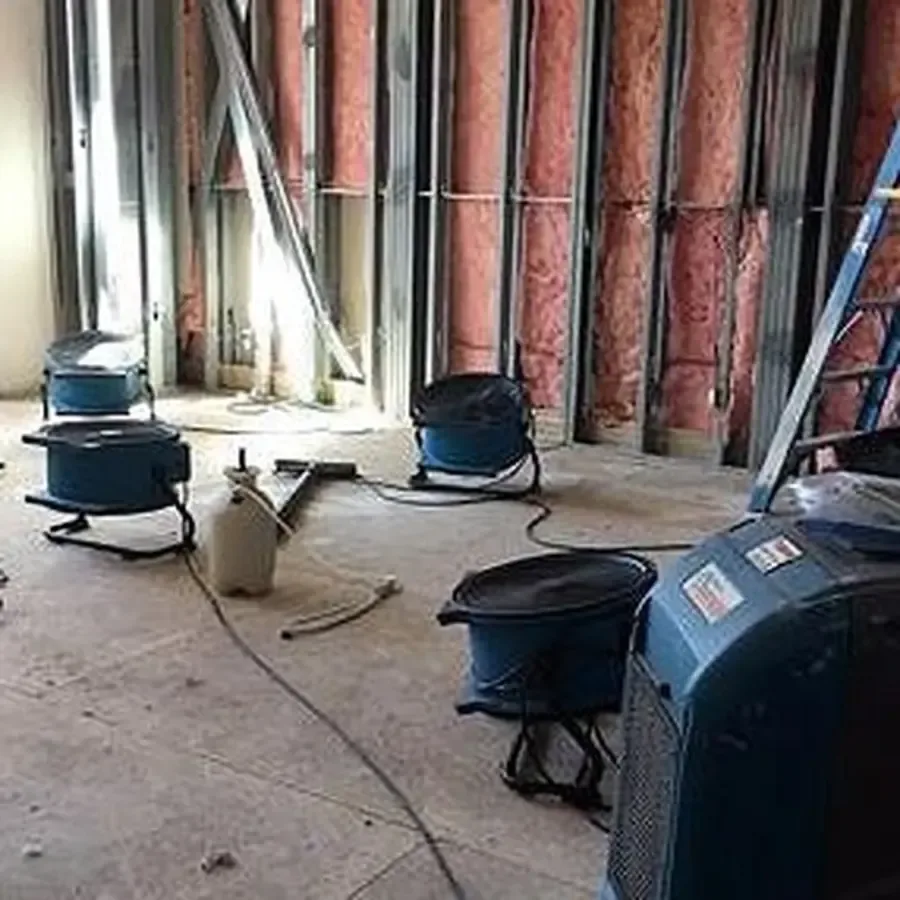
First steps for structural drying and dehumidification
- Keep the doors closed. Closed doors and windows let the dehumidifiers work on the air inside.
- Leave the equipment alone. Do not unplug or move air movers and dehumidifiers, which are placed from the readings.
- Run the AC if advised. Cooling the room can help the dehumidifiers pull moisture out faster.
- Note any odors. A musty smell can mean wet material remains out of sight.
Drying is a measured process, not a matter of switching on a few fans. The crew sorts the loss by class, places equipment from the readings, and adjusts it every day until each material reaches its target. Standing water is removed first through water extraction.
What does structural drying and dehumidification cost in Clearwater, FL?
Drying one area often runs $1,000 to $2,500, while Class 4 slab or block drying can pass $8,000. Equipment count, the days on site and the materials involved set the price.
Class 1 or 2, one area
$1,000 to $2,500- Air movers set
- One dehumidifier
- Several days on site
Class 3, several rooms
$2,500 to $5,000- Multiple dehumidifiers
- Containment
- Daily records
Class 4, slab or block
$5,000 to $8,000+- Desiccant drying
- Tenting
- Long monitoring
Ranges are typical, not a quote: the category of water, square footage, material class and how fast drying started move the number most. Run the water damage cost calculator for a closer range.
How structural drying and dehumidification is handled, step by step
Classify the loss
The water class and the materials involved set the equipment plan and the drying goal.
Place the equipment
Air movers and dehumidifiers go where the meter shows moisture, not where it looks wet.
Monitor each day
Readings are logged, and equipment is moved or adjusted as areas reach dry values.
Release the space
Final readings confirm every monitored point is dry, and the equipment comes out.
Water classes and drying plans
- Class 1: little moisture absorbed, mostly low-porosity materials.
- Class 2: carpet, pad and wall bottoms wet, so more evaporation is needed.
- Class 3: ceilings, walls and insulation soaked from above.
- Class 4: dense materials such as concrete, which release water slowly.
The class is assigned from what the water reached, not from how much there was, which is why a small leak into dense material can need more equipment than a larger spill on tile. Concrete floors are covered in more detail under slab leak water damage.
Humid air works against the job
Clearwater has a humid subtropical climate, warm to hot most of the year, so outdoor air rarely helps a structure dry. Dehumidifiers pull moisture out of the indoor air while air movers keep it flowing across wet surfaces, and the doors and windows stay closed.
When drying turns into a rebuild
The city's interactive flood zone map lists base flood elevation, design flood elevation, elevation certificates and substantial improvement and damage history for individual properties, and the city has adopted elevation standards above the federal minimum. If a dry-out grows into a larger rebuild, that information can matter, so the drying records are kept in a form an adjuster or the permit office can follow.
Daily readings and the final check
Technicians return each day to record temperature, humidity and material moisture, then move or remove equipment as areas dry. Equipment leaves only when every monitored point reaches its dry standard. A written log with dates, readings and equipment counts goes into the file for the adjuster.
Structural drying and dehumidification across Clearwater and nearby
Structural drying covers homes, apartments and businesses across the city, from Island Estates and Harbor Oaks to Countryside and North Greenwood, and along Cleveland Street, Keene Road and State Road 60.
The same service nearby: structural drying and dehumidification in Pinellas Park, Dunedin, Safety Harbor.
Related water damage services in Clearwater
Structural Drying and Dehumidification questions
How do I know the structure is actually dry?
Meters read each material, and the numbers are compared with dry reference points. A surface that feels dry can still hold water inside.
Why do the fans and dehumidifiers run all day?
Moisture comes out of materials slowly, and the air around them has to stay dry enough to take it. Stopping early leaves water in the framing.
Does drying use a lot of electricity?
Yes, equipment draws power for several days. The crew sets only what the readings call for, and some carriers consider the extra cost part of the claim.
What is desiccant drying?
A desiccant unit removes moisture chemically rather than by cooling, which works better when the air is already dry or the material is dense. It is common on concrete.
Can a house with a flood history be dried like any other?
Yes. The drying is the same, but the city's flood and permit records may affect the rebuild, so a clear drying log helps.
How often does the crew return?
Every day until the readings are dry. Each visit records temperature, humidity and moisture, and adjusts or removes equipment as areas finish.
Dry means measured, not guessed
Materials that look dry can still hold water, so an early call and daily readings keep hidden moisture from lingering.
☎ (888) 621-2041Call the drying team