Slab Leak Water Damage in Clearwater, FL
A supply pipe leaking under a concrete floor can run for weeks before a warm spot or a damp rug gives it away. The drying team lifts the wet finish and dries the concrete itself.
☎ (888) 621-2041Call about a leak under the floor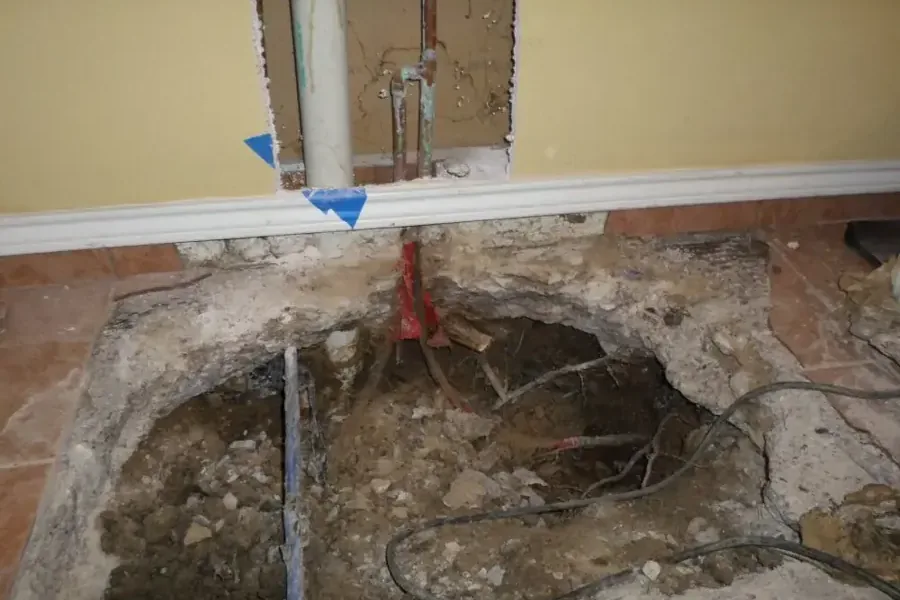
First steps for slab leak water damage
- Locate the main shutoff. Closing it stops the leak while the plumber is on the way, and it keeps the slab from taking in more water.
- Pull back the rugs. Lift rugs and small furniture off a damp floor so the surface can breathe and the wet area is easy to see.
- Note the warm spots. Mark them with painter's tape so the plumber and the drying team can find them quickly.
- Photograph the floor. Capture the damp areas and any lifting flooring before anything is removed.
A slab leak is a pressurized pipe leaking beneath a concrete floor, so the water rises into flooring, baseboards and wall bottoms and also soaks into the concrete. The pipe repair is a plumber's job. The drying team handles everything the water reached. Because the water comes from below, it often travels farther under the floor than anyone can see on the surface.
What does slab leak water damage cost in Clearwater, FL?
A slab leak caught in one room often runs $2,500 to $5,000, and a long-running leak that soaked most of the floor can pass $15,000. Room count and concrete dry-down time drive the cost.
One room, caught early
$2,500 to $5,000- One room lifted
- Trim removed
- LGR drying
Several rooms
$5,000 to $10,000- Flooring removed
- Wall bottoms opened
- LGR or desiccant units
Long-running leak
$10,000 to $15,000+- Most flooring out
- Cabinets pulled
- Slow concrete dry-out
Ranges are typical, not a quote: the category of water, square footage, material class and how fast drying started move the number most. Run the water damage cost calculator for a closer range.
How slab leak water damage is handled, step by step
Map the concrete
Meters read the slab at set spots to show where moisture has spread.
Lift wet finishes
Flooring, pad and trim come up where they trap water against the concrete.
Dry the slab
Dehumidifiers pull moisture out of the concrete, with desiccant units added if readings stall.
Confirm and record
Repeat readings show the slab at dry values, and the log goes into the claim file.
Signs worth acting on
- A water bill that jumps with no change in use.
- A warm patch on a floor that should be cool.
- The sound of running water when every fixture is off.
- Damp carpet edges or lifting laminate near a wall.
None of these proves a slab leak, but each calls for a plumber and a moisture check before the damage spreads. A pipe that has already split inside a wall falls under burst pipe water damage.
Who handles which part
The city covers the water service pipe from the main to the property boundary or meter, and the owner takes over from the meter to the home. A leak on the house side of the meter is the owner's to repair, so the plumber comes first and the drying starts once the pipe stops running. The adjuster will want the plumber's report along with the drying logs.
Why concrete takes patience
In structural drying terms, concrete holds moisture long after the surface feels dry, so readings are taken at set spots and repeated. LGR dehumidifiers handle most jobs, and desiccant units step in when the slab needs much drier air to give up its water. Moisture can also wick up through drywall and trim, so wall bottoms along the wet floor get readings too.
What comes up first
Removal is limited to what traps water against the concrete, so sound flooring stays put when the readings allow it.
- Carpet and pad lifted from the wet area.
- Laminate, plank or tile removed where moisture is trapped.
- Baseboards and wall bottoms opened.
- Cabinet bases vented or pulled.
Slab leak water damage across Clearwater and nearby
Slab leak drying covers homes and townhomes across the city, including Countryside, Greenbriar, North Greenwood and Del Oro Groves, and the streets off Keene Road and McMullen Booth Road.
The same service nearby: slab leak water damage in Pinellas Park, Dunedin, Safety Harbor.
Related water damage services in Clearwater
Slab Leak Water Damage questions
How is a slab leak found?
A plumber uses pressure tests and electronic listening gear to locate the pipe. The drying team does not repair the pipe but maps the moisture around it.
Can hardwood be saved after a slab leak?
Sometimes, when the leak is caught early and drying begins promptly. Wood that has cupped or taken water from below for weeks usually has to come up.
How long does concrete take to dry?
It is slow. Surface readings can look fine while the slab still holds water, so equipment runs until repeat readings stay at dry values.
Will insurance cover it?
That depends on the wording of the policy. Carriers often cover resulting damage differently from the pipe repair itself, so the moisture logs and photos matter.
Can an apartment unit have a slab leak?
Yes. A concrete floor on the ground level can leak the same way, and the drying team works with building management when more than one unit is affected.
Does the whole floor have to come up?
Only the wet areas and a margin around them. Moisture readings decide the boundary, so sound flooring stays in place wherever the slab reads dry.
A hidden leak keeps adding water
Concrete soaks up water for as long as the pipe runs, so an early call shortens the dry-out and shrinks the repair.
☎ (888) 621-2041Call the drying team