Hurricane and Storm Water Damage in Oldsmar, FL
Oldsmar took Hurricane Helene, a localized flash flood and Hurricane Milton within about two weeks in 2024. The restoration team opens wet ceilings and walls, removes soaked insulation and dries the house and framing.
☎ (888) 621-2041Report storm water in the house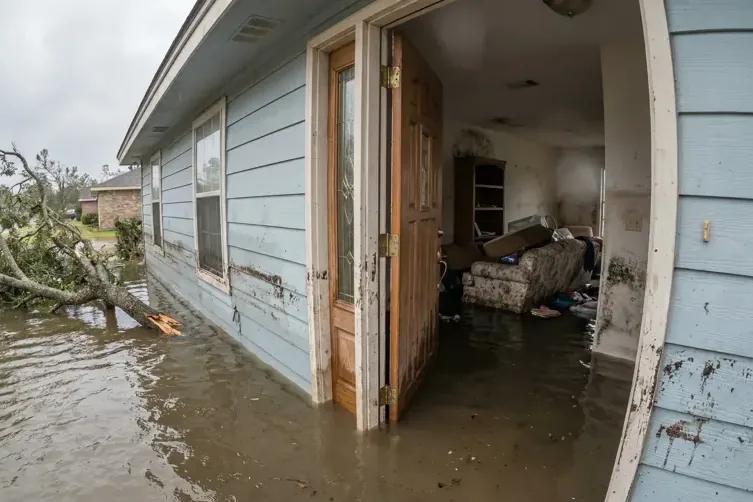
First steps for hurricane and storm water damage
- Make the house safe. Stay out of rooms with sagging ceilings, and keep clear of fallen power cables, standing water and wet outlets until it is safe.
- Stop further rain. Cover openings with tarps or boards if that can be done safely, and move belongings away from drips.
- Catch what is falling. Set buckets under leaks, and poke a small relief hole in a bulging ceiling only if it can be done from a safe spot.
- Photograph the storm loss. Record the roof, ceilings, floors and belongings before cleanup, since adjusters rely on dated photos.
A storm loss rarely comes from one source. Rain pushes in through the roof and openings, the ground floor can take on rising water, and both can happen in the same house. In Oldsmar, 2024 showed how fast storms can stack up, and each wet cavity needs its own check.
What does hurricane and storm water damage cost in Oldsmar, FL?
Storm water damage typically runs $3,000 to $20,000 or more. One ceiling and room sit at the low end, and a whole-house loss with attic and wall cavities opened sits at the top.
One room or one ceiling
$3,000 to $6,000- Ceiling drywall opened
- Wet insulation removed
- Room dried
Several rooms
$6,000 to $12,000- Ceilings and walls opened
- Flooring dried or lifted
- LGR dehumidifiers
Whole-house storm loss
$12,000 to $20,000+- Attic and ceilings throughout
- Wall cavities opened
- Long dry-out
Ranges are typical, not a quote: the category of water, square footage, material class and how fast drying started move the number most. Run the water damage cost calculator for a closer range.
How hurricane and storm water damage is handled, step by step
Assess the openings
Moisture meters and a thermal camera show where rain traveled, from the attic to wall bottoms.
Open and remove
Wet ceiling drywall, insulation and soaked flooring come out so trapped moisture can leave.
Set the drying plan
Air movers and dehumidifiers go in, sized to the materials and the amount of water.
Verify and report
Readings continue until each area is dry, and the logs and photos are saved for the claim.
Two kinds of storm water
Rain that enters from above is usually clean at first and affects ceilings, insulation and upper walls. Water that rises from outside is treated as contaminated and follows the steps in flood water cleanup.
What gets opened and dried
- Wet ceiling drywall and sagging insulation overhead
- Wall cavities where rain ran down inside the framing
- Flooring and subfloors that took on storm water
- Attic framing and decking exposed to rain
Wet ceilings are opened early because trapped water and insulation hold moisture against framing and can drop drywall onto belongings. Room-by-room steps for opened ceilings appear in ceiling leak water damage.
Back-to-back storm damage
Pinellas County counted 28,350 damaged homes after Helene and 12,560 after Milton by mid-October 2024. Those are countywide figures, but they show why materials that never fully dried between storms need a careful moisture check before anyone closes up a wall.
Roof work and permits
A roofer repairs the roof, and roof permits can go directly to Pinellas County Building. Inside the house, the drying team handles the wet ceilings and walls. In the Community Redevelopment Area or along the Tampa Road Corridor, city architectural approval comes first.
Hurricane and storm water damage across Oldsmar and nearby
Storm work reaches the Forest Lakes subdivisions, Gull Aire Village, homes in Country Club Estates that took Helene's flood water, and shops and offices along Tampa Road, wherever wet ceilings and floors show up after a storm.
The same service nearby: hurricane and storm water damage in Pinellas Park, Safety Harbor, Dunedin.
Related water damage services in Oldsmar
Hurricane and Storm Water Damage questions
What do storm losses have in common?
Rain reaches places that stay hidden, such as attic insulation and wall cavities, so a storm claim usually needs moisture mapping, not just a look at the visible stain.
Does the 2024 storm series matter now?
It can. Helene, a flash flood and Milton came within about two weeks, so materials that stayed damp between storms may still be holding moisture and need checking.
Who repairs the roof?
A roofer does. Roof permits can be submitted directly to Pinellas County Building, while the drying team handles the wet ceilings, insulation and framing inside the house.
Is storm water the same as flood water?
Not always. Rain through the roof starts cleaner, while water rising from outside is contaminated. The category decides what comes out and what can be dried in place.
Will insurance cover storm water damage?
Wind-driven rain and flood water are often treated differently under a policy, so the carrier decides. Photos, readings and a scope of work help show what kind of loss it was.
What does storm damage cleanup cost?
A single ceiling and room often runs $3,000 to $6,000, several rooms $6,000 to $12,000, and a whole-house loss $12,000 to $20,000 or more.
Dry the storm loss before it settles in
Photos of the ceilings, floors and openings plus a short note on what happened give the team what it needs to plan.
☎ (888) 621-2041Reach the storm damage crew