Mobile Home Water Damage in Seminole, FL
Manufactured homes hide water in the floor system, the belly wrap and thin walls. The drying crew opens the underside where needed, removes swollen particleboard and wet insulation, and dries the joists.
☎ (888) 621-2041Water under the floor? Call the drying crew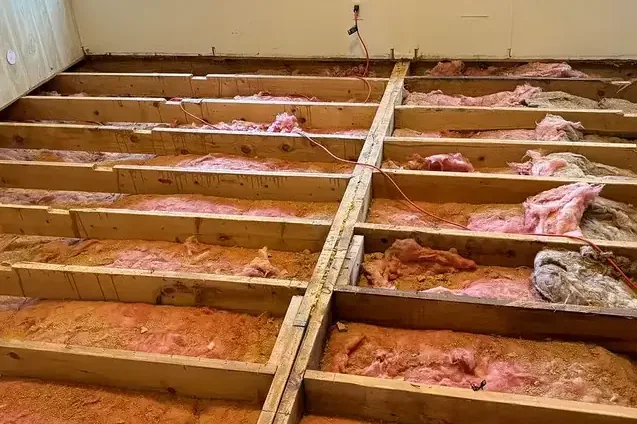
First steps for mobile home water damage
- Stop the water. Close the shutoff or the main and keep appliances off until the floor is checked.
- Stay off soft spots. Spongy flooring may not hold weight. Keep heavy furniture and people off it until it is checked.
- Check underneath. If the belly wrap is sagging or wet, leave it alone and tell the crew. Cutting it blindly spreads water.
- Take photos. Photograph the wet floor, ceiling stains and any visible belly damage.
On October 18, 2019, a tornado with winds of about 70 mph hit the Twelve Oaks Mobile Home Park in Seminole, tearing a carport off one home and knocking out power. FEMA inspectors assessed the damage afterward. Manufactured homes carry water differently from site-built houses, and a leak shows in the floor first.
What does mobile home water damage cost in Seminole, FL?
One room caught early costs $1,500 to $3,000, a replaced subfloor section $3,000 to $6,000, and several rooms or a belly-wide loss $6,000 to $9,000 or more.
Early catch, one room
$1,500 to $3,000- Water pulled out
- Belly inspected
- Floor dried
Replaced subfloor section
$3,000 to $6,000- Swollen board cut out
- Wet insulation removed
- Joists dried
Several rooms or whole belly
$6,000 to $9,000+- Belly wrap opened
- Floor sections out
- Walls dried
Ranges are typical, not a quote: the category of water, square footage, material class and how fast drying started move the number most. Run the water damage cost calculator for a closer range.
How mobile home water damage is handled, step by step
Map the moisture
A moisture meter and thermal camera find the wet areas and show whether the belly is involved.
Extract and open
Standing water is pulled out, then flooring and belly wrap are cut open only where readings stay high.
Remove and dry
Swollen board and wet insulation come out. Air movers and dehumidifiers dry the joists and surrounding floor.
Close the belly
Once readings are dry, the open belly is noted for repair and the work is logged.
Why the floor fails first
Most floors are particleboard over joists, with insulation below and a belly wrap sealing the underside. Particleboard swells when it stays wet, goes soft underfoot and does not shrink back. The insulation then holds water against the joists, so a small leak can become a large soft spot.
- Soft or bouncy flooring checked with a moisture meter
- Belly wrap opened in a small section to reach the insulation
- Swollen particleboard cut out in sections and removed
- Joists and the underside dried with air movers and a dehumidifier
Wind-driven rain and roofs
Roof seams, vents and window frames are common entry points in a storm. After high wind, the first sign of a leak is often a damp ceiling or wall, with water running down into the floor. Roof-related water is covered under roof leak water damage, and larger events under hurricane and storm damage.
Drying without taking the home apart
The aim is to open as little as the readings require. Small sections of belly and floor are cut, equipment is placed, and moisture is tracked until the joists and subfloor edges read dry. Mold can start in damp insulation in 24 to 48 hours, so readings set the timing. See also structural drying.
Mobile home water damage across Seminole and nearby
Manufactured and mobile home work runs citywide, from Parkwood, Sandy Woods and Orangewood to the Bay Pines area, and along Park Boulevard and 113th Street North, wherever a leak has soaked a floor.
The same service nearby: mobile home water damage in Pinellas Park, Clearwater, Safety Harbor.
Related water damage services in Seminole
Mobile Home Water Damage questions
Why does a mobile home floor swell so fast?
Most floors use particleboard, which absorbs water quickly and does not shrink back once it swells. A small leak that sits for a few days can leave a soft, raised patch.
Is the belly wrap a problem after a leak?
It can be. The wrap holds water against the insulation and joists, so a sagging or wet belly usually means moisture is trapped. The crew opens a small section to check first.
Can a soft floor be dried instead of replaced?
Rarely. Swollen particleboard seldom regains strength, so wet sections are usually cut out and replaced after the joists below are dry.
Do storms hurt manufactured homes differently?
Wind lifts roof seams and covers, and a tornado with winds of about 70 mph tore a carport off one home at a local park in 2019. Rain then enters through the damage and shows up in ceilings and floors.
What should be photographed first?
The wet floor, the ceiling stains, any visible belly damage and the appliance or pipe that leaked. Photos taken before cleanup support insurance claims.
Where do mobile home leaks usually start?
Supply hoses, water heaters and plumbing connections are common sources, and roof seams are common after storms. Finding the source early keeps the repair smaller.
A swollen floor only gets softer
Particleboard that stays wet keeps swelling and the insulation beneath keeps holding water. The crew removes what failed, opens what is trapped and dries the joists.
☎ (888) 621-2041Talk to the drying crew