Slab Leak Water Damage in Seminole, FL
A leak in a supply pipe under or inside the concrete wets the floor from below, often before anyone sees a puddle. The drying team lifts wet flooring, dries the slab and wall bottoms and logs each reading.
☎ (888) 621-2041Damp floor and a moving meter? Call now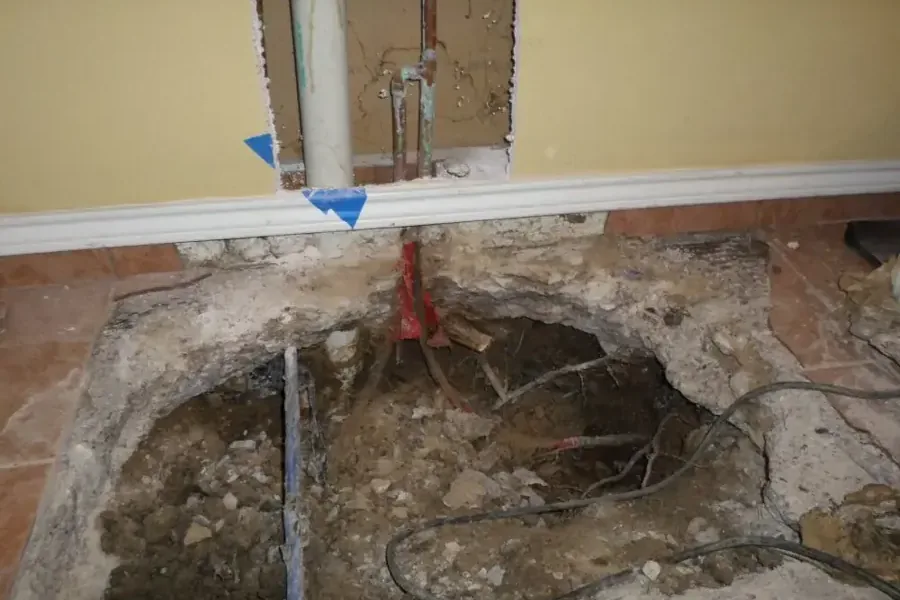
First steps for slab leak water damage
- Run the meter test. Turn off every faucet, appliance and the irrigation, then watch the meter; movement means water is escaping somewhere.
- Close the main. If the meter moves or the floor is wet, shut the main valve until a plumber finds the leak.
- Move belongings. Take rugs, furniture and stored boxes off the damp area so the flooring can be lifted.
- Photograph the floor. Capture wet spots, cupped planks and cracked tile before anything is removed.
A slab leak happens when a supply pipe fails under or inside a concrete floor. The water moves up and out through the concrete, so carpet pad, plank flooring and baseboards get wet from underneath. The first sign is often a damp spot or a high water bill, not a visible puddle.
What does slab leak water damage cost in Seminole, FL?
Slab leak water damage cleanup typically runs $2,500 to $15,000 here, based on how many rooms the leak reached, the type of flooring and how long the water ran before anyone found it.
One room, found early
$2,500 to $5,000- Flooring up in one room
- Baseboards removed
- LGR dehumidifier
Two or more rooms
$5,000 to $10,000- Flooring removed
- Wall bottoms opened
- Desiccant or LGR drying
Leak ran for weeks
$10,000 to $15,000+- Most flooring out
- Cabinet bases pulled
- Extended concrete drying
Ranges are typical, not a quote: the category of water, square footage, material class and how fast drying started move the number most. Run the water damage cost calculator for a closer range.
How slab leak water damage is handled, step by step
Map the concrete
The tech checks the slab, baseboards and wall bottoms with meters and an infrared camera.
Lift wet materials
The crew takes up wet pad, plank flooring and baseboards so the concrete can release moisture.
Dry the slab
The drying team sets desiccant or LGR dehumidifiers and air movers, with tenting where it helps.
Confirm and record
Daily readings continue until the concrete and walls match the dry reference, and the log goes into the claim file.
Warning signs to check
- The water meter keeps turning with every fixture and appliance off
- A warm patch on the floor, usually over a hot water pipe
- Carpet that feels damp or plank flooring that cups with no leak in sight
- A water bill that climbs while daily use stays the same
A simple meter test with everything turned off confirms it. About 40.9 percent of households here are one person, so a leak can run for days while no one is home to notice.
The plumber and the drying team
A plumber locates the leak with electronic detection and repairs it through the floor or reroutes the pipe overhead. The restoration team works the water side at the same time: it maps moisture across the concrete and wall bottoms, pulls wet pad and flooring, removes baseboards and sets dehumidifiers.
Why concrete dries slowly
Concrete is dense and gives water back slowly, which often makes a slab leak a Class 4 loss. The drying team runs desiccant or LGR dehumidifiers with air movers aimed low, and sometimes tents the floor to focus dry air on it. Pinellas County describes the soils at its lake management area as poorly drained sands, so the crew judges dry by readings, never by how the floor looks. The structural drying page covers the equipment and the readings in more detail.
What happens to the flooring
- Carpet: the pad usually goes, and the carpet can often be dried and relaid
- Laminate and vinyl plank: usually lifted, since water sits trapped below
- Tile: often stays unless it is loose, hollow or cracked
- Baseboards and drywall bottoms: removed when readings stay high
Slab leak water damage across Seminole and nearby
Slab leak drying reaches every part of the city, from The Gardens, Lake Pearl Estates and Orangewood to Sandy Woods, Parkwood, Windtree Oaks and the homes and apartments around Bay Pines.
The same service nearby: slab leak water damage in Pinellas Park, Clearwater, Safety Harbor.
Related water damage services in Seminole
Slab Leak Water Damage questions
How long does concrete take to dry after a slab leak?
Usually four to ten days. Concrete releases moisture slowly, so the drying team runs desiccant or LGR dehumidifiers and decides by daily readings.
Does the restoration crew repair the leaking pipe?
No. A plumber locates and repairs or reroutes the pipe. The restoration crew handles the wet flooring, baseboards, wall bottoms and the drying.
Will insurance pay for slab leak damage?
Many policies cover the resulting water damage and the cost of reaching the pipe, but not the pipe itself. Coverage depends on your policy, so check with your own insurer.
Can tile floors stay in place?
Often, if the tile is firm and not hollow or cracked. Carpet pad usually comes out, and most laminate or vinyl plank gets lifted so the concrete can dry.
Why is one spot on my floor warm?
A leak on a hot water pipe under the concrete warms the floor above it. A warm patch near a kitchen or bath is a common sign.
What does slab leak cleanup cost?
Most jobs run $2,500 to $15,000. The water damage cost calculator gives a typical range, and the main slab leak page covers the work in more detail.
Water rising through the floor? Start the drying today.
A leak under concrete spreads into flooring, cabinets and wall bottoms. The crew maps it, lifts what is wet and dries the slab.
☎ (888) 621-2041Begin the slab leak drying