Sewage Backup Cleanup in Clearwater, FL
A backed-up toilet, tub or floor drain releases black water that carries bacteria. The cleanup crew seals the area, removes the water and porous materials, and treats every surface it touched.
☎ (888) 621-2041Clearwater sewage backup help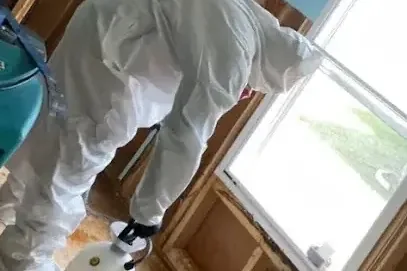
First steps for sewage backup cleanup
- Keep everyone out. Children, pets and anyone with a weak immune system should leave the affected rooms.
- Stop using the plumbing. No flushing, laundry or dishwasher cycles until the cause of the backup is found.
- Do not touch it bare-handed. Skip the shop vacuum and the mop, which spread contamination through the rest of the house.
- Photograph from the doorway. Capture the water level and the affected rooms without stepping in.
Sewage is never ordinary water damage. It carries bacteria, viruses and parasites, so the rooms it touched are handled as a contamination zone until every porous surface is removed and the rest is cleaned and treated.
What does sewage backup cleanup cost in Clearwater, FL?
One bathroom often runs $2,500 to $5,000, and a large or long-standing backup can pass $15,000. The spread of the water and how many porous materials it reached set the total.
One bathroom
$2,500 to $5,000- Work area contained
- Flooring and low drywall out
- Treated and dried
Several rooms
$5,000 to $10,000- Carpet and pad bagged
- Drywall cut above the stain
- Negative air running
Large or long-standing backup
$10,000 to $15,000+- Cabinets and trim removed
- Contents disposed of
- Extended drying
Ranges are typical, not a quote: the category of water, square footage, material class and how fast drying started move the number most. Run the water damage cost calculator for a closer range.
How sewage backup cleanup is handled, step by step
Contain the zone
Barriers, signage and negative air keep contamination from reaching the clean rooms of the home.
Remove the water
Contaminated water is extracted with equipment that stays inside the sealed zone.
Strip porous materials
Carpet, pad, wet drywall and insulation are cut out and sealed in bags.
Treat and verify
Surfaces are cleaned and treated, the structure is dried and the readings are recorded for the file.
Public overflows and backups at home
The city has had named overflows: about 150,000 gallons from a failed forcemain fitting on McMullen Booth Road on September 27, 2016, about 500,000 gallons from the Marshall Street plant on May 9, 2023, and 44,881 gallons at Holt Avenue and Russell Street on September 19, 2026. Those spills happen on public ground. A backup inside a house is a separate cleanup that follows the same contamination rules. Standing water is pulled out first through water extraction.
How the work area is contained
- Plastic barriers seal the doorway and the vents.
- Negative air pulls contaminated air out through filters.
- Workers wear gloves, suits and respirators.
- Tools and bags stay inside the zone until they are cleaned or sealed.
- Air scrubbers with HEPA filters run until the work is finished.
What cannot be saved
Carpet, pad, insulation and drywall that sewage soaked are removed because they cannot be made safe. Particleboard cabinet bases and soft contents usually go as well. Hard, sealed surfaces are cleaned and treated instead.
After the dirty water is out
Remaining surfaces get an antimicrobial treatment, then dehumidifiers and air movers carry out structural drying of the framing and floor. Final readings and photos are recorded, so the repair crew and the adjuster work from the same facts. Hard, sealed surfaces such as tile and tubs are scrubbed and sprayed, not replaced.
Sewage backup cleanup across Clearwater and nearby
Sewage cleanup covers homes, apartments and shops across the city, including the streets around Holt Avenue, Cleveland Street and McMullen Booth Road, plus Countryside, North Greenwood and Del Oro Groves.
The same service nearby: sewage backup cleanup in Pinellas Park, Dunedin, Safety Harbor.
Related water damage services in Clearwater
Sewage Backup Cleanup questions
Is it safe to clean a sewage backup yourself?
It is not recommended. Raw sewage carries disease-causing organisms, and household cleaning tools spread them. Trained crews use containment and protective gear.
Does the cleanup wait until the cause is found?
No. The contaminated water is removed right away, while a plumber or the utility traces the cause. Leaving sewage in place lets it soak deeper into the structure.
What happens to carpet after a backup?
Carpet and pad that sewage touched are removed and discarded. They hold contamination that cannot be reliably cleaned out.
How is a backup different from a public overflow?
A public overflow spills outdoors on streets and into storm drains, while a backup spills inside a building. Both involve black water, but the cleanup inside is handled as a contamination job.
Will the smell go away after cleanup?
Once the contaminated materials are out and the structure is treated and dried, the odor goes with them. Odor that lingers usually means a wet material was missed.
Can the family stay in the house?
Often not in the affected rooms. The crew advises on where it is safe to stay while containment is in place, and children and pets should be kept clear.
Sewage should not sit in the structure
The longer contaminated water sits, the deeper it soaks into drywall and subfloor, so an early call limits what has to come out.
☎ (888) 621-2041Call the cleanup crew