Water Extraction in Safety Harbor, FL
Standing water soaks into pad, subfloor and wall bottoms quickly. The extraction crew pulls it out with truck-mounted and portable units, then hands the room to the drying team with moisture readings recorded.
☎ (888) 621-2041Ask about extraction at your address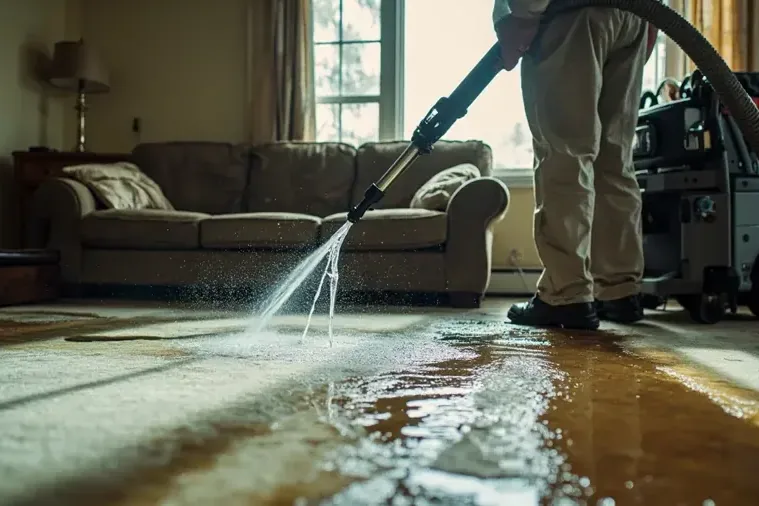
First steps for water extraction and removal
- Stop the source. Close the valve to the failed fixture, or the main shutoff, before anyone starts pulling up flooring.
- Lift small items. Move rugs, shoes, books and electronics off wet floors, and leave heavy furniture where it stands until the extraction crew can block it.
- Keep power away. If water reaches outlets, lamps or the panel, stay out of the room and have the breaker switched off first.
- Photograph first. Take wide and close photos of the standing water and the damaged items before anything is lifted or discarded.
Standing water in a Safety Harbor home can come from a failed supply pipe, an overflowing drain or storm water pushed ashore from Old Tampa Bay. Whatever the source, the extraction crew removes the bulk of it first, because every minute it sits, more moisture moves into the materials around it.
What does water extraction and removal cost in Safety Harbor, FL?
Extraction by itself usually costs $700 to $1,800 for one room of clean water, $1,800 to $3,500 for several rooms, and $3,500 to $9,000 or more when most of the home or Category 3 water is involved.
A single wet room
$700 to $1,800- Wand and pump extraction
- Moisture readings taken
- Air movers set
Several rooms at once
$1,800 to $3,500- Truck-mounted extractors
- Pad lifted if needed
- LGR dehumidifiers
Most of the home or Category 3
$3,500 to $9,000+- Contaminated water handled
- Carpet and pad removed
- Antimicrobial applied
Ranges are typical, not a quote: the category of water, square footage, material class and how fast drying started move the number most. Run the water damage cost calculator for a closer range.
How water extraction and removal is handled, step by step
Assess the water
The crew confirms the source is off, checks the water category and maps wet areas with moisture meters.
Remove standing water
Wands, squeegee tools and truck-mounted units pull water from hard floors, carpet and pad.
Open what holds water
Toe kicks come off, pad is lifted and small cuts are made so trapped water can reach the extractor.
Hand off to drying
Readings are logged and the room moves to structural drying with equipment set for what is still wet.
What the crew pulls out first
- Pooled water on tile, vinyl and sealed floors, removed with wands and squeegee tools.
- Water held in carpet and pad, pulled with weighted extractors before the pad is judged.
- Water under cabinets and in wall bottoms, reached with small tools and cut vents.
- Water inside the floor system, found with moisture meters before drying equipment goes in.
Pad often holds more water than the carpet above it. Lifting one corner early shows whether the pad can stay, and that single check saves a lot of guesswork later.
Why the floor sets the pace
Wet wood and drywall begin to swell, stain and grow mold within 24 to 48 hours, so removing bulk water quickly protects flooring that could otherwise be lost. The faster the water leaves, the less equipment the drying phase needs.
Storm water needs extra care
Water that came in from outside can carry silt, debris and bacteria. After Hurricane Idalia, flood waters covered Waterfront Park next to the pier, which shows how quickly low ground near the bay can fill. The crew treats storm water as contaminated until it is proven otherwise, wears protective gear and removes porous materials such as carpet pad that touched it. Clean supply water gets a lighter approach, and carpet can often be dried in place.
What gets written down
- Moisture readings from each wet room before and after extraction.
- Photos of the standing water and affected materials before work starts.
- Which materials were removed, with their approximate sizes.
- The water category, so the adjuster sees why a material was discarded.
Water extraction and removal across Safety Harbor and nearby
Extraction work runs throughout Safety Harbor, ZIP 34695, from the downtown blocks and the streets near Waterfront Park to Veterans Memorial Park and the Elm Street and Pine Street service area.
The same service nearby: water extraction and removal in Pinellas Park, Oldsmar, Clearwater.
Water damage restoration in Safety Harbor · every city covered
Related water damage services in Safety Harbor
Water Extraction and Removal questions
Can extraction start before the leak is repaired?
Yes, once the water is shut off at the valve. The plumber can repair the pipe while the extraction crew removes the water, as long as both can work safely in the room.
Does the crew remove water from under flooring?
Yes. Moisture meters and small cuts or vents show where water sits beneath tile, laminate and wood, and extraction tools reach it before the drying equipment goes in.
Is storm water handled differently?
Water that came in from outside is treated as contaminated. The crew wears protective gear, removes carpet and pad that touched it and disinfects surfaces before drying begins.
How long does extraction take?
A single room often takes a few hours, while a flooded ground floor can take a full day or more. The drying phase afterward usually runs several days.
Will the pad and carpet need to go?
Clean-water carpet can often stay if the pad is lifted early and the area is dried. Carpet and pad that took sewage or flood water are removed.
What is left for the insurance adjuster?
Photos of the standing water, moisture readings before and after extraction and a list of removed materials, all gathered as the work happens.
Does extraction work on concrete and tile?
Hard surfaces release water quickly to wands and squeegees, so extraction there is fast. The slower part is the concrete and grout beneath, which the drying equipment handles afterward.
Water on the floor does not wait
The extraction crew brings pumps, wands and moisture meters, removes the water and starts the drying plan so floors and walls are protected.
☎ (888) 621-2041Reach the extraction crew