Structural Drying and Dehumidification in Safety Harbor, FL
Once the standing water is out, the moisture left in framing, subfloors and concrete still has to leave. The drying team sets dehumidifiers and air movers by class of water damage and reads the materials until they match dry targets.
☎ (888) 621-2041Plan the dry-out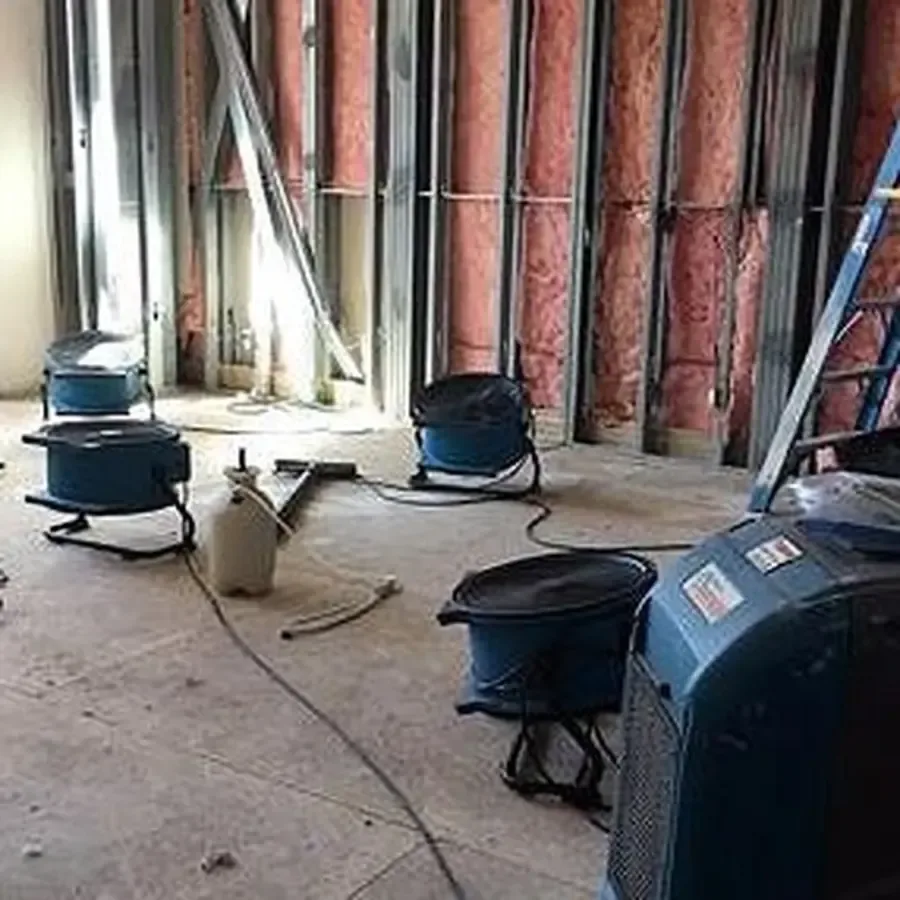
First steps for structural drying and dehumidification
- Measure first. Moisture readings and a thermal image show which materials are wet before any equipment is placed.
- Place the equipment. Dehumidifiers and air movers go in by class of damage and room size.
- Check every day. Readings are logged and the equipment is adjusted as materials dry.
- Confirm dry. Final readings are compared with a dry reference before the equipment is removed.
Water that looks gone is often still inside drywall, framing and concrete. In Safety Harbor, where the air near Old Tampa Bay carries a lot of moisture on its own, drying a structure means controlling humidity as much as moving air. The drying team measures first, sets equipment second and checks it every day.
What does structural drying and dehumidification cost in Safety Harbor, FL?
Structural drying usually costs $1,000 to $2,500 for one area at Class 1 or 2, $2,500 to $5,000 for several rooms at Class 3 and $5,000 to $8,000 or more for Class 4 slab or block.
Class 1 or 2, one area
$1,000 to $2,500- Air movers set
- One dehumidifier running
- Three to five days
Class 3, several rooms
$2,500 to $5,000- Several dehumidifiers
- Containment where needed
- Daily logs kept
Class 4, slab or block
$5,000 to $8,000+- Desiccant units
- Tenting where needed
- Long monitoring
Ranges are typical, not a quote: the category of water, square footage, material class and how fast drying started move the number most. Run the water damage cost calculator for a closer range.
How structural drying and dehumidification is handled, step by step
Map the moisture
Meters and an infrared camera show where moisture sits in walls, floors and ceilings.
Set the equipment
LGR dehumidifiers and air movers are placed by room size, with desiccant units added for dense materials.
Monitor daily
Temperature, humidity and material readings are logged, and equipment is moved or removed as they change.
Release the space
Equipment comes out only after readings match a dry reference, and the log goes to the adjuster.
How the equipment is chosen
- Class 1 and 2 losses, with limited wet material, need air movers and a dehumidifier.
- Class 3 losses, where water came from above, add more dehumidifiers and often containment.
- Class 4 losses, with water deep in concrete or dense materials, need desiccant units and long monitoring.
- Category 3 water adds cleaning and disinfection before drying begins.
A moisture map taken before the equipment goes in decides how many air movers and dehumidifiers the room needs. Desiccant units pull moisture from the air with a drying material instead of cold coils, so they keep working when humidity is low and dense materials are slow to release water.
Daily monitoring
Every visit, the crew reads moisture in the materials and records temperature and humidity in the room. Equipment is moved, added or removed as the numbers change, so a room is never over-dried or left wet. The final readings are compared with an unaffected reference area, and the equipment leaves only when they match. Containment, which is plastic sheeting around the wet zone, keeps humidity from spreading to dry rooms and lets the dehumidifiers work harder where it counts.
Flood zones and lenders
The city's Building Department gives out flood zone information, and a property in the 100-year floodplain must carry federal flood insurance if a mortgage lender requires it. Drying records help after any flood water cleanup, because they show the adjuster that the structure was dried to a measured standard. Water extraction always comes before drying starts.
Structural drying and dehumidification across Safety Harbor and nearby
Structural drying covers homes and shops across 34695, including the downtown blocks, the streets near Waterfront Park and Veterans Memorial Park, and the Elm Street and Pine Street service area.
The same service nearby: structural drying and dehumidification in Pinellas Park, Oldsmar, Clearwater.
Water damage restoration in Safety Harbor · every city covered
Related water damage services in Safety Harbor
Structural Drying and Dehumidification questions
What does Class 1 through 4 mean?
Classes describe how much water a material absorbed and how fast it will release it. Class 1 is the least, and Class 4 covers dense materials such as concrete.
Why are dehumidifiers needed, not just fans?
Fans move air, but dehumidifiers remove the moisture that air picks up. Without them, humidity rises and the materials stay wet.
How loud and long is the equipment?
Dehumidifiers and air movers are noticeable, and they run around the clock for the length of the dry-out, usually three to five days.
How is dry decided?
By readings compared with an unaffected area of the same material. The crew keeps equipment running until the numbers match.
Can drying start before cleanup?
Water extraction and removal of contaminated materials come first. Drying then focuses on what stays, which makes it faster.
Is it normal for the house to feel warm during drying?
Yes. Dehumidifiers and air movers add heat, and warm air holds more moisture, which is part of how the dry-out works.
What happens if the structure is not dried fully?
Hidden moisture can lead to mold, swelling and odors, which is why the crew works to measured targets instead of guesses.
Damp framing keeps causing damage
The drying team places the equipment, reads the materials every day and keeps the logs until the structure matches a measured dry target.
☎ (888) 621-2041Reach the drying team